Who is Crom? Conan’s Grim God – Explained

Disclosure: This post is reader-powered and contains affiliate links. If you click through and make a purchase, I may earn a commission at no additional cost to you.
Table of Contents
“Crom!”
It’s the word Conan shouts before battle, in moments of shock, and when everything goes wrong. But who exactly is Crom? And why does Conan invoke a god who, by his own admission, doesn’t care about mortals at all?
I think Crom is one of the most fascinating elements of Robert E. Howard’s worldbuilding – a deity who exists not to comfort his worshippers but to challenge them. In my opinion, understanding Crom is essential to understanding Conan himself.
Who is Crom?
Crom is the chief god of the Cimmerians, the grim northern people who inhabit the cold, mountainous land where Conan was born. Unlike the gods of other Hyborian nations – who promise salvation, answer prayers, or demand elaborate worship – Crom offers nothing.
He sits on his great mountain, Crom’s Mountain (called Ben Morgh in some sources), brooding over the world. He sends forth doom and death. He doesn’t listen to prayers. He doesn’t intervene in mortal affairs. He doesn’t care.
And yet the Cimmerians worship him anyway.
What I love about this is how it reflects the Cimmerian character. These are a hard people living in a hard land, and their god matches them perfectly. They don’t want a comforting deity – they’d despise one. Crom respects strength, and the Cimmerians respect Crom for demanding it.
What Does Crom Give His Worshippers?
According to Cimmerian belief, Crom grants each person exactly two gifts at birth:
- The will to fight
- The strength to survive
That’s it. No miracles, no divine protection, no answered prayers. Crom gives you the tools at the start and expects you to handle the rest yourself. If you fail, that’s your problem. If you succeed, don’t expect praise.
I think this is genuinely brilliant theology for a barbarian culture. It explains why Cimmerians are so self-reliant and why they view softer peoples with contempt. Their god doesn’t coddle them, so why should they expect coddling from anyone else?
In my opinion, this also makes Crom one of the most honest gods in fantasy literature. He doesn’t pretend to love his worshippers or promise rewards he won’t deliver. The deal is clear from the start: here’s your strength, now get on with it.
Why Doesn’t Crom Answer Prayers?
Howard addresses this directly through Conan. The Cimmerian explains that it’s actually better that Crom doesn’t listen, because if you attracted his attention, he’d probably send you doom rather than help.
This isn’t a god you want noticing you.
The Cimmerians don’t build temples to Crom. They don’t perform rituals or sacrifices. They don’t have priests. What would be the point? Crom doesn’t want worship – he wants his people to be strong enough not to need it.
Personally, I find this refreshing compared to the transactional religions in most fantasy settings. There’s no “pray harder and good things happen” here. The universe of Conan is indifferent at best, hostile at worst, and Crom embodies that perfectly.
Crom in the 1982 Film
The 1982 Conan the Barbarian film gave Crom his most memorable moment in popular culture. When Conan prays before the Battle of the Mounds, he delivers what I’d argue is one of the best prayers in cinema:
He asks Crom for revenge. He asks for help in battle. But then he acknowledges that Crom probably won’t listen – and if Crom won’t help, then to hell with him.
It’s not really a prayer at all. It’s a statement of intent that happens to be directed at a god. Conan isn’t begging; he’s informing Crom of his plans and daring the god to stop him.
I think this scene captures the Cimmerian relationship with Crom perfectly. It’s not worship in any conventional sense. It’s an acknowledgement that Crom exists, combined with complete self-reliance about what comes next.
Famous Crom Quotes
There are two Crom quotes that really stand out, in my humble opinion. They also give us the most information we really have about Crom.
The first is the original quote from Robert E Howard, Conan’s creator, which sums it all up. Conan says the following:
“Their chief is Crom. He dwells on a great mountain. What use to call on him? Little he cares if men live or die. Better to be silent than to call his attention to you; he will send you dooms, not fortune! He is grim and loveless, but at birth he breathes power to strive and slay into a man’s soul. What else shall men ask of the gods?”
Which kind of makes the scene in the Conan the Barbarian film a little odd, as Conan makes it clear that he thinks praying to Crom isn’t a good idea. But, he goes on to say:
“Crom, I have never prayed to you before. I have no tongue for it. No one, not even you, will remember if we were good men or bad. Why we fought, or why we died. All that matters is that two stood against many. That’s what’s important! Valor pleases you, Crom… so grant me one request. Grant me revenge! And if you do not listen, then to HELL with you!”.
There are many more Conan and Robert E Howard quotes over on this Conan the Barbarian quote generator. Have fun picking your favourites!
Crom vs Other Hyborian Gods
To understand what makes Crom special in other ways, compare him to the other major deities in Howard’s world:
Mitra – The god of the Hyborian kingdoms (especially Aquilonia) is benevolent, answers prayers, and promises salvation. His worship involves temples, priests, and moral codes. He’s essentially the “good” god of the setting.
Set – The serpent god of Stygia is actively malevolent, demanding human sacrifice and granting dark powers to his sorcerer-priests. He’s the primary antagonist deity in many Conan stories.
Ishtar, Bel, Derketo – Various gods of the eastern and southern kingdoms who involve themselves in mortal affairs to varying degrees, usually through priesthoods and temples.
Then there’s Crom, who simply… doesn’t engage. He’s not good or evil in any meaningful sense. He gave humanity what it needed and walked away. In my opinion, this makes him more realistic than any of the others – a god who reflects the indifferent universe Howard depicts.
What Crom Reveals About Conan
Crom isn’t just worldbuilding – he’s character development. The god tells us everything we need to know about Conan’s philosophy:
Self-reliance is paramount. Conan never expects divine intervention because his entire culture taught him not to. When he succeeds, it’s through his own strength and cunning. When he fails, he doesn’t blame the gods.
Life is struggle. The Cimmerian worldview, embodied by Crom, sees existence as an endless battle. You fight until you can’t, and then you die. There’s a brutal honesty to this that Conan carries throughout his adventures.
Strength deserves respect. Crom respects the strong. Conan respects the strong. This isn’t might-makes-right morality exactly – Conan has his own code – but physical and mental toughness matter more than birth, wealth, or piety.
Death is final. Unlike Mitra-worshippers who believe in paradise, Cimmerians believe the dead go to a grey realm of clouds and ice where they wander forever. It’s bleak, but it means Conan lives fully in the present rather than hoping for rewards after death.
I think this is why Conan feels so different from other fantasy heroes. He’s not on a divine mission. He’s not a chosen one. His god explicitly doesn’t choose anyone. He’s just a man with strength and will, making his way through a hostile world.
Is Crom a Good God?
Here’s where I’ll offer a controversial opinion: I think Crom is actually a better god than many fantasy deities.
Not morally better – Crom doesn’t care about morality. But better in the sense of honest, consistent, and realistic.
Most fantasy religions are wish-fulfilment. Pray to the good god and he’ll help you. Serve the dark god and he’ll grant you power. It’s transactional, comforting, and fundamentally unlike how most people experience religion in reality.
Crom offers no comfort, but he also tells no lies. He doesn’t promise what he won’t deliver. He doesn’t demand worship he won’t reward. He’s exactly what he appears to be: a grim god for a grim people in a grim world.
Is Crom worth believing in? In my opinion, within the context of Howard’s universe, absolutely. He’s the only honest deity in the Hyborian Age.
Where to Read About Crom
If you want to explore Crom and Cimmerian religion further, here are my recommendations:
Essential Howard Stories:
- The Phoenix on the Sword – Contains Conan’s explanation of Crom and Cimmerian beliefs
- Queen of the Black Coast – The famous “what do you believe” conversation between Conan and Bêlit
- The Frost Giant’s Daughter – Shows Cimmerian attitudes toward northern gods
Best Editions:
- The Coming of Conan the Cimmerian (Del Rey) – Contains all the essential stories with the original text
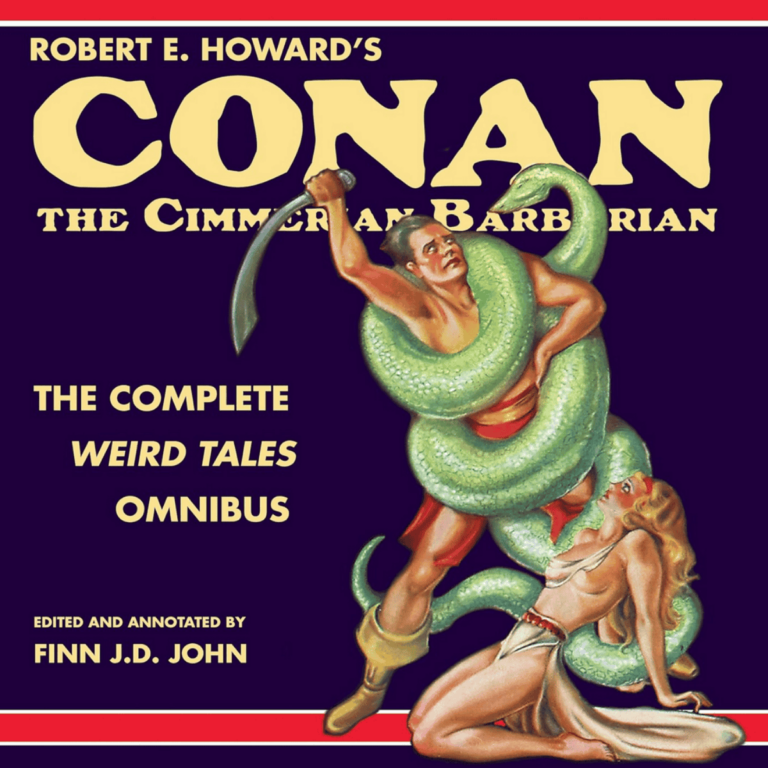
- The Complete Chronicles of Conan (Gollancz) – More affordable single-volume option
Comics:
- The Marvel Conan comics explore Crom occasionally, particularly in stories set in Cimmeria
- Conan the Barbarian: The Original Marvel Years Omnibuses – Includes several Cimmeria-set stories
The 1982 Film:
- Conan the Barbarian 4K UHD – The prayer to Crom scene alone is worth the price
Where to start with Conan if you’re not sure:
Frequently Asked Questions
Is Crom a real god from mythology?
Crom is entirely Robert E. Howard’s creation, though the name may have been inspired by Crom Cruach, an Irish deity associated with sacrifice. Howard’s Crom is quite different from the mythological figure – he’s a unique creation for the Hyborian Age.
Does Crom ever appear in the Conan stories?
No. Crom never directly appears in any of Howard’s stories. He exists entirely through what characters say about him, which I think makes him more effective. A god who actually showed up would undermine the whole point.
Why does Conan say “Crom” all the time if the god doesn’t listen?
It’s habit, exclamation, and cultural identity rather than actual prayer. When Conan shouts “Crom!” he’s not expecting the god to do anything – it’s like saying “God!” or “Christ!” in English. The name invokes his heritage and worldview without being literal worship.
Is Crom evil?
No. Crom is indifferent, which is worse in some ways but not evil. He doesn’t want to harm humanity – he simply doesn’t care either way. He gave people the tools to survive and considers his job done.
Are there priests of Crom?
No. The Cimmerians have no organised religion, no temples, and no priesthood. Each person’s relationship with Crom (such as it is) is individual. This is part of why Cimmerian culture is so decentralised compared to priest-ruled nations like Stygia.
Related Reading
- Cimmeria: Conan’s Homeland Explained
- Conan’s Gods: Complete Pantheon Guide (coming soon)
- Where to Start with Conan the Barbarian
- The Hyborian Age Map: Complete Geography Guide (coming soon)