Who is Set? The Serpent God of Stygia – Explained

Disclosure: This post is reader-powered and contains affiliate links. If you click through and make a purchase, I may earn a commission at no additional cost to you.
Table of Contents
Set coiled about the world like a python about its prey.
That’s how Howard describes him – not merely a god to be worshipped, but a cosmic predator that once dominated the earth and still lurks in the shadows of Stygia’s cryptic temples.
While Mitra represents everything the Hyborian kingdoms aspire to be, Set embodies everything they fear: the ancient, the cold-blooded, the endlessly patient serpent waiting to strike.
What makes Set genuinely terrifying, I think, is his worship. This isn’t abstract theology – Set’s followers sacrifice human beings on his altars, keep giant snakes in his temples that are allowed to hunt people in the streets, and consider it a mortal sin to kill a serpent.
The faith isn’t about enlightenment or redemption. It’s about power, purchased with blood.
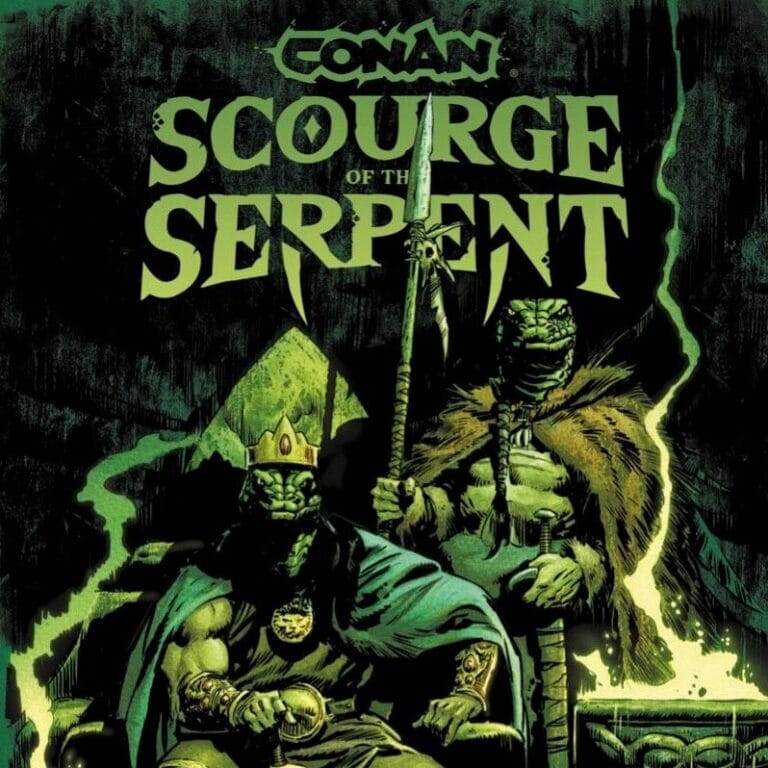
The recent Scourge of the Serpent mini series and the Tim Waggoner book, Conan: Spawn of the Serpent are all about Set and his/her servants.
I really enjoyed the series and the book and would recommend them. We see a lot of focus on the serpent men, original foes of Howard’s other famous barbarian, Kull.
Howard’s Original Vision
Set appears in Howard’s very first Conan story, “The Phoenix on the Sword” (1932), establishing him immediately as the primary antagonist in the cosmic struggle of the Hyborian Age.
The long-dead sage Epemitreus tells Conan: “Ages ago Set coiled about the world like a python about its prey. All my life, which was as the lives of three common men, I fought him.
I drove him into the shadows of the mysterious south, but in dark Stygia men still worship him who to us is the arch-demon.”
Howard based Set loosely on the Egyptian god of the same name, but his version bears little resemblance to the actual Egyptian deity (who was a god of storms and chaos, not serpents).
Howard’s Set is “the Old Serpent” – a title that deliberately evokes the biblical serpent, the tempter in Eden, the embodiment of ancient evil.
In Howard’s cosmology, Set predates human civilisation. His original worshippers were the Serpent Men of Valusia, the pre-human race that Kull of Atlantis fought in the Thurian Age.
When those serpent people were driven from the world, Set found new followers among the humans of Stygia, who built their dark civilisation on the foundations of serpent worship.
Set Worship in Practice
The practical details of Set worship are genuinely horrifying. In “The Hour of the Dragon,” Howard describes how serpents are sacred in Stygia – to kill one is a mortal sin.
Giant snakes are kept in Set’s temples, and “when they hungered, were allowed to crawl forth into the streets to take what prey they wished. Their ghastly feasts were considered a sacrifice to the scaly god.”
Out of all the images that have stayed in my head from the Conan stories, huge snakes slithering around the streets and being allowed to eat whoever they want is one that really stayed with me.
Imagine living in a city where massive snakes periodically escape from the local temple to hunt citizens, and resisting them is considered sacrilege.
That’s daily life in Stygian cities. Citizens are expected to accept being devoured by sacred serpents with equanimity. Anyone who dares resist can be lynched as a heretic.
Human sacrifice forms the core of Set’s worship. The blood offerings serve a practical purpose beyond appeasing the god – according to characters like Thugra Khotan, they actually enhance the magical power of the one performing the sacrifice.
Set worship isn’t merely evil religion; it’s evil religion that works, granting genuine power to those willing to pay the terrible price.
Thoth-Amon and the Priests of Set
The most famous servant of Set is Thoth-Amon, the Stygian sorcerer who appears in “The Phoenix on the Sword.”
Though he only appears in one original Howard story, Thoth-Amon became Conan’s arch-nemesis in the comics and later adaptations.
In the original story, Thoth-Amon has fallen from his position as high priest of Set, reduced to servitude under the outlaw Ascalante. But when he recovers his Serpent Ring of Set – a source of magical power – he immediately summons a demon to kill his master.
The scene demonstrates both the power of Set worship and its fundamentally predatory nature.
The priests of Set are almost as frightening as their god. They shave their heads, practice dark sorcery, and rule Stygia as a theocracy. Their power extends beyond religion into politics – the kings of Stygia serve at the pleasure of the priesthood, not the other way around.
Thulsa Doom, as reimagined in the 1982 film, draws heavily on this archetype of the serpent priest.
The 1982 Film’s Cult of Set
The 1982 Conan the Barbarian film reimagined Set worship through Thulsa Doom’s snake cult. While the film takes liberties with Howard’s mythology (Thulsa Doom was originally a Kull villain, not associated with Set), it captures the essential horror of serpent worship.
James Earl Jones’s Thulsa Doom leads a cult that combines Set worship with elements of real-world cults like the People’s Temple and the Assassins.
His followers give themselves willingly, believing in his message of flesh over steel. The snake-to-arrow transformation and Doom’s own ability to become a serpent visualise the supernatural power that Set grants his faithful.
What I find effective about the film’s approach is how it shows Set worship as seductive rather than merely terrifying. People choose to follow Thulsa Doom.
They find meaning in submission to the serpent. It’s a more insidious form of evil than simple monster worship.
Set in the Comics
Marvel Comics expanded Set’s role dramatically, connecting him to their broader cosmology. In Marvel’s version, Set is one of the Elder Gods – ancient beings who ruled Earth before humanity.
He’s depicted as a massive seven-headed serpent, a design that became iconic despite differing from Howard’s more ambiguous descriptions.
The comics established the Serpent Crown as a major artifact of Set worship, a device that allows the wearer to channel Set’s power (and become influenced by his will).
This artifact appeared in various Marvel comics, connecting the Hyborian Age to the modern Marvel Universe.
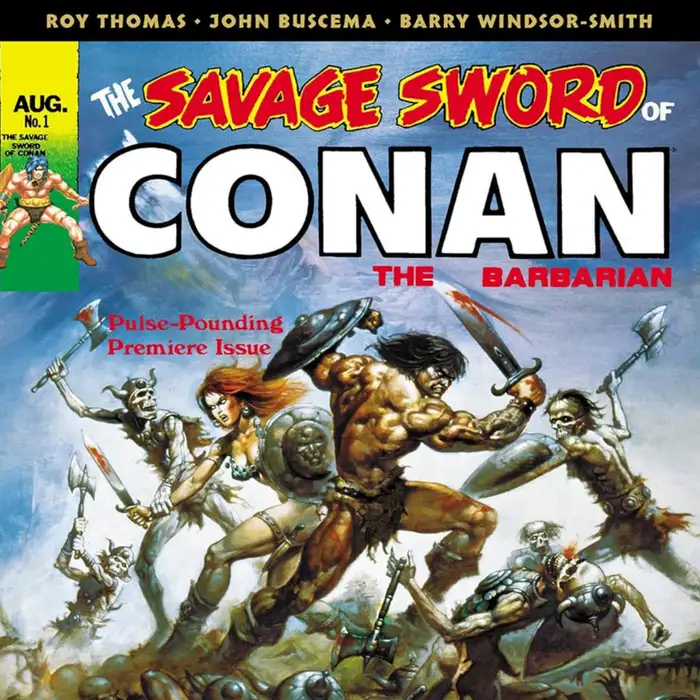
Roy Thomas, who wrote many of the Conan comics, used Set as the ultimate antagonist – the dark force behind multiple villains and schemes.
This elevated Set from a background deity to an active threat, though it arguably simplified Howard’s more ambiguous approach to divine intervention.
This has carried on with Jim Zub’s work on the newest Conan comic iterations (and are well worth your time).
Set in Conan Exiles
In Conan Exiles, Set is one of the most mechanically useful religions. His worship focuses on serpents and poison, with unique items that make him particularly valuable for mid-to-late game content.
The Set Antidote cures poison, alcohol poisoning, and food poisoning – incredibly useful given how common poison is in the Exiled Lands.
Snake Arrows are among the strongest ammunition in the game. The Feast of Set provides excellent health regeneration.
To worship Set, you use the Setite Ritual Knife to harvest human hearts from corpses. These hearts become offerings that generate Manifestations of Zeal, which power your altar and eventually allow you to summon Set’s avatar – a massive serpent that can devastate enemy bases.
What I appreciate about Conan Exiles’ implementation is how it makes Set worship genuinely tempting. The mechanical benefits are excellent.
You want to worship the evil snake god because he rewards you well. It captures something essential about Howard’s vision – Set worship persists because it works.
The Conflict with Mitra
Set and Mitra represent the fundamental theological conflict of the Hyborian Age. Where Mitra is light, civilisation, and mercy, Set is darkness, ancient evil, and predatory power. Their followers have been at war for millennia.
This isn’t merely symbolic opposition. Mitraic artifacts genuinely work against Set’s forces. In “The Phoenix on the Sword,” Epemitreus marks Conan’s sword with the phoenix symbol of Mitra, and this mark destroys a demon sent by Set’s servant.
Holy water from sacred rivers harms vampires. The cross of Mitra can ward off undead.
The eternal struggle between these gods mirrors the political conflict between the Hyborian kingdoms and Stygia. It’s civilisation versus barbarism (from the Hyborian perspective), or truth versus deception (from either side’s perspective, really).
Howard uses this religious conflict to add cosmic stakes to what might otherwise be simple adventure stories.
Why Set Endures
Set represents something fundamental in Howard’s fiction – the ancient evil that civilisation tries to suppress but can never entirely defeat.
He existed before humanity, his worship predates recorded history, and his influence persists despite millennia of opposition.
I think Set works so well as an antagonist because he’s not merely powerful but patient. He doesn’t need to win today.
He’s been waiting for ages and can wait ages more. His worship spreads through seduction as much as conquest – people choose to serve him because he offers power that “good” gods don’t provide.
This makes Set a more interesting villain than a simple dark lord. He represents a genuine temptation, a path to power that requires only that you abandon your humanity piece by piece.
The horror of Set worship isn’t that his followers are deceived – it’s that they know exactly what they’re doing and do it anyway.
Related Reading
- Gods of the Hyborian Age – Complete Guide
- Who is Mitra? The God of Light Explained
- Is Set different to Ymir?
- Where is Stygia? The Land of Set
- Who is Thulsa Doom? The Serpent Cult Leader
- Who is Crom? Conan’s God Explained
Frequently Asked Questions
Is Set based on the Egyptian god?
Howard borrowed the name from the Egyptian god Set (or Seth), but his version is completely different. The Egyptian Set was a god of storms, chaos, and the desert – not serpents. Howard’s Set is “the Old Serpent,” drawing more from biblical imagery of the serpent in Eden than from Egyptian mythology.
What’s the relationship between Set and the Serpent Men?
In Howard’s mythology, the Serpent Men of Valusia were Set’s original worshippers during the Thurian Age (the era of Kull). When King Kull and his allies destroyed the Serpent Men’s civilisation, Set found new followers among the humans of Stygia. The connection between Set worship and the pre-human serpent race adds to the god’s ancient, inhuman horror.
Why do people worship Set?
Set offers genuine power to his followers. His priests are among the most powerful sorcerers in the Hyborian Age, and human sacrifice actually enhances magical ability in Howard’s world. People worship Set because he delivers results, even if the cost is terrible.
Is Set evil?
By any reasonable standard, yes. Set demands human sacrifice, his worship involves allowing giant snakes to eat citizens, and his priests practice dark sorcery. However, Howard never explicitly states that Set is cosmically evil – he’s simply a god whose nature and worship are horrific to human sensibilities.
Is Set good in Conan Exiles?
Set is one of the strongest religions in Conan Exiles. The Set Antidote is invaluable for curing poison, Snake Arrows are excellent ammunition, and the various buffs from Set worship are genuinely useful. If you can stomach the roleplay implications of sacrificing human hearts to a serpent god, Set is mechanically excellent.
How do I learn Set in Conan Exiles?
You can select Set during character creation, learn it from Mek-kamoses (a Set priest found in Sepermeru), spend 50 Knowledge points in the religion section, or find the religious artifact associated with Set.