Conan the Corsair: Complete Era Guide, Best Comics & Essential Stories
Disclosure: This post is reader-powered and contains affiliate links. If you click through and make a purchase, I may earn a commission at no additional cost to you.
Introduction
I think there’s something about Conan’s pirate years that captures the essence of who he really was.
During this legendary phase of his life, Conan sails the Western Sea as a pirate alongside Bêlit, Queen of the Black Coast, raiding merchant vessels and Stygian outposts while living out what many consider his greatest love story.
This guide covers Conan’s mid-twenties – a period where passion, loyalty and loss define him as much as sword and sorcery.
It’s also famous for one of the most well-known Conan quotes:
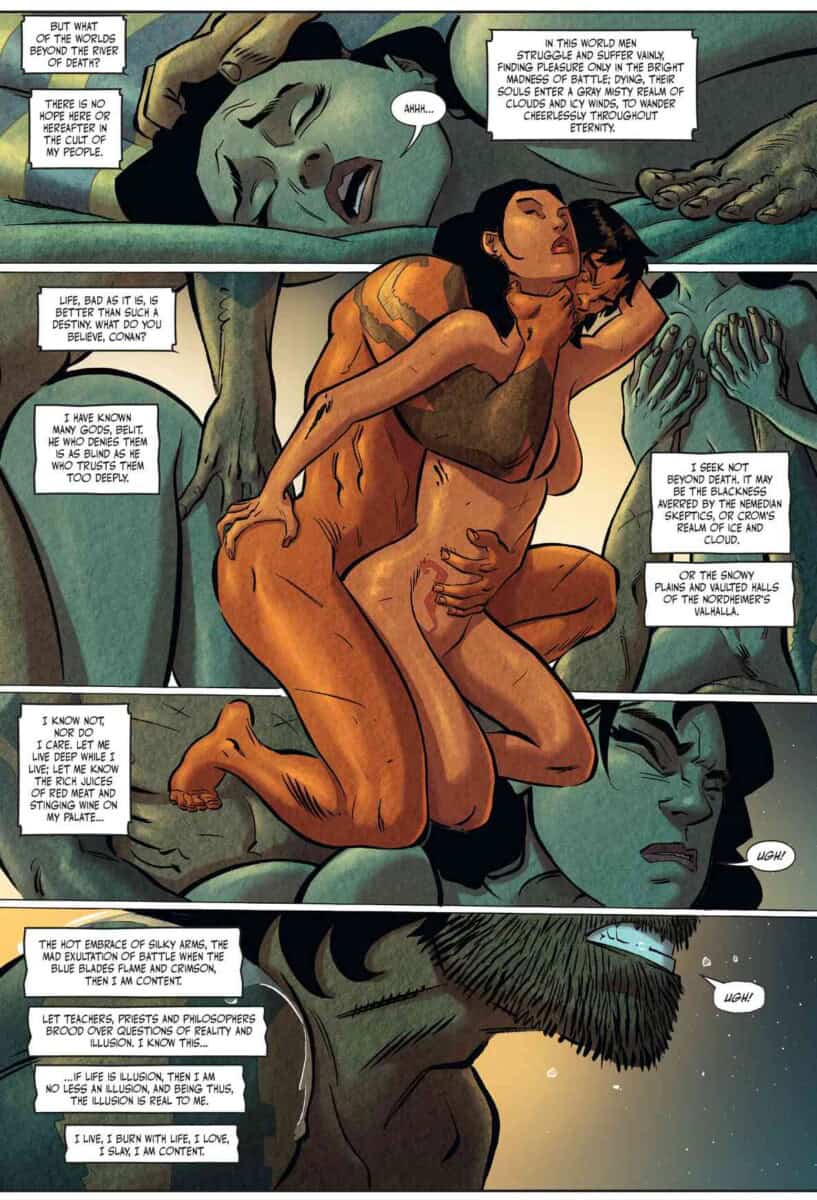
“I know this: if life is an illusion, then I am no less an illusion, and being thus, the illusion is real to me. I live, I burn with life, I love, I slay, and am content.” – Conan.
Beautiful, philosophical lines showcasing Robert E Howard’s talent as a writer.
This conversation I found on Reddit very much sums up my feelings for it, too.
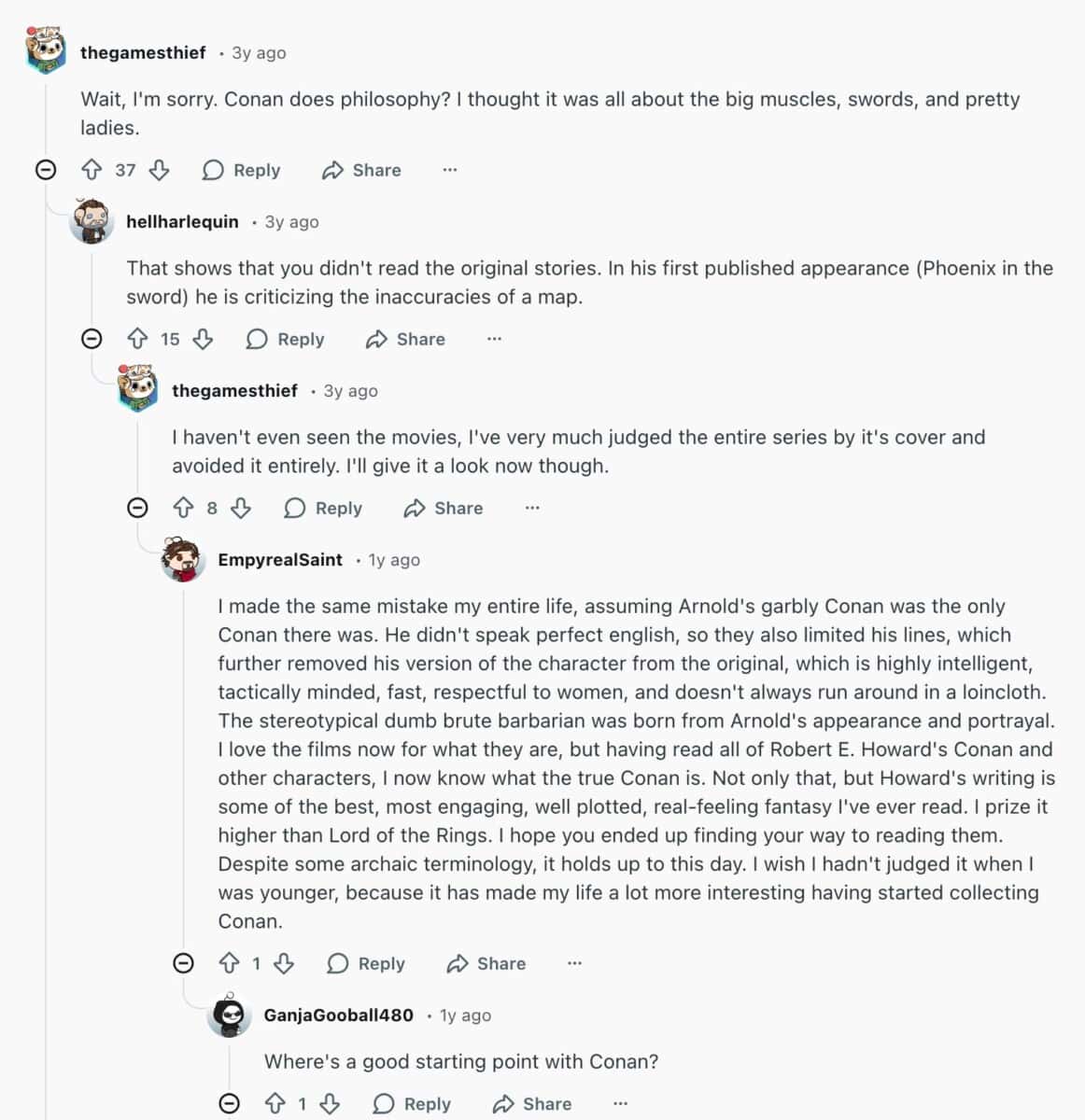
Table of Contents
What Is the Conan Corsair Era?
The corsair era encompasses the years when Conan operates as a pirate and raider along the Black Coast and the shores of Kush, most famously as Bêlit’s lover and right hand aboard the Tigress.
This phase is anchored by Robert E. Howard’s 1934 novelette “Queen of the Black Coast”, one of the most acclaimed Conan tales ever written.
Quick Start: Essential Corsair Reading
If you just want the core of the Conan corsair era:
- Prose: “Queen of the Black Coast” by Robert E. Howard
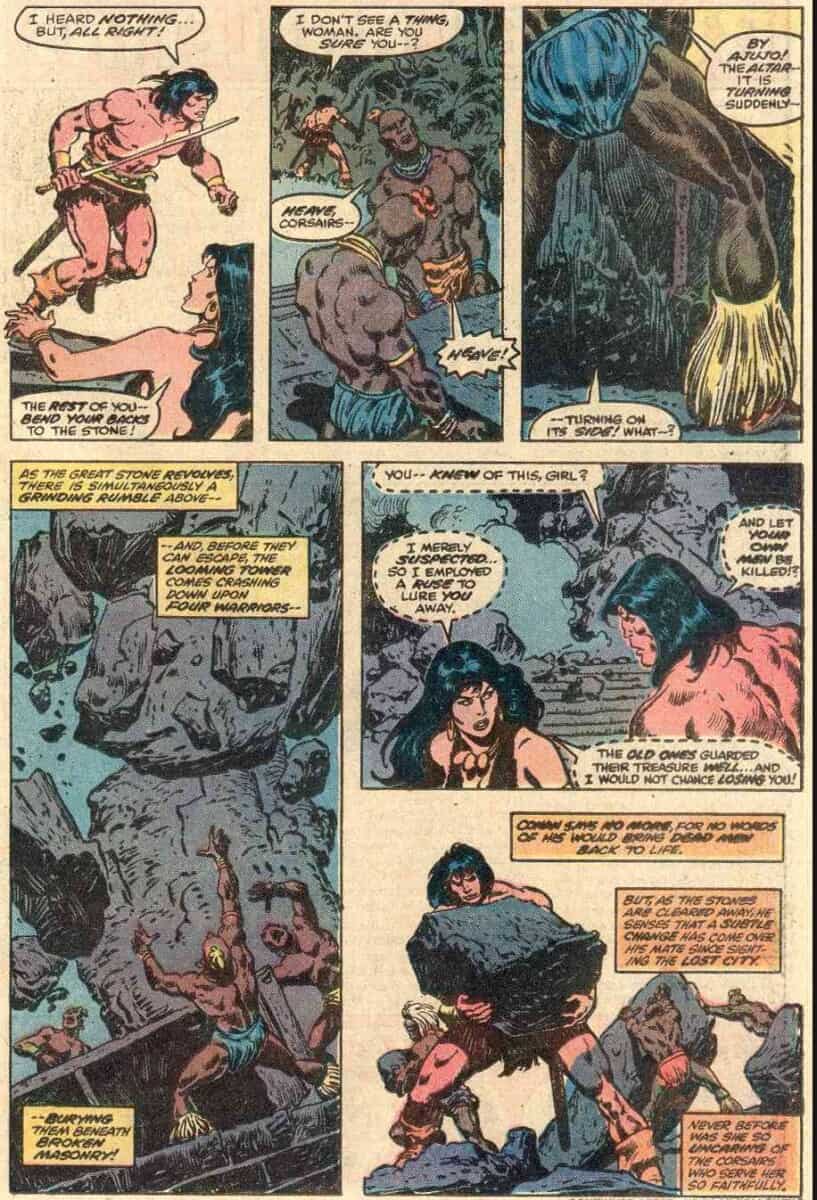
- Classic comics: Conan the Barbarian (Marvel) #57–59 & #100. Roy Thomas was the king of Conan at this time. Conan Omnibus 3 and Omnibus 4 are perfect.
- Modern adaptation: Conan the Barbarian (Dark Horse, Brian Wood) #1–3, #22–25 or Ablaze’s The Cimmerian.
It’s easy to build out from here into the wider Black Coast and Black Kingdoms story cycles.
Key Events of the Corsair Period
Flight from Argos
After refusing to betray a friend to an Argossean magistrate, Conan kills the official and flees south from Messantia. He boards the merchant vessel Argus seeking escape from the law and a path into unknown waters.
Please note there are some spoilers ahead.
Meeting Bêlit
When Bêlit’s corsairs attack the Argus, Conan fights with such ferocity that the pirate queen orders her men to spare him. Impressed by his battle prowess and drawn by an instant, almost mythic attraction, she offers him a place at her side aboard the Tigress. And who can forget that dance?
Plundering the Black Coast
Together, Conan and Bêlit raid coastal settlements and Stygian shipping, becoming a whispered terror along the Western Sea. Among the Black Kingdoms, Conan gains the name Amra – “the Lion” – and starts to become a legend in his own right.
The Zarkheba Expedition & Tragedy
In pursuit of cursed treasure, they sail up the forbidden Zarkheba River into ancient, demon-haunted ruins. A winged horror destroys the Tigress and slaughters much of the crew. Bêlit is killed, but keeps her final vow – she returns from beyond death to aid Conan one last time.
Aftermath in the Black Kingdoms
Haunted by Bêlit’s death, Conan drifts inland, becoming a war-chief among the Bamulas and other Black Kingdom tribes. His time as a corsair is over, but the skills, scars and legend he forged on the Black Coast follow him for the rest of his life.
Who Is Bêlit?
Bêlit is far more than a supporting character. She is the central figure of the corsair era and arguably Conan’s greatest love. Her presence reshapes his character and gives this phase of his life a unique emotional weight.
Character Overview
- Origin & name: A Shemite woman, her name likely links to Bel, a Shemite god of thieves. Historically, “Bêlit” is related to an Akkadian word for “lady” or “mistress”, giving her title a mythic flavour.
- Appearance: Howard describes her as ivory-skinned, with long black hair and burning dark eyes, wearing little more than a girdle and jewels. Her pale skin contrasts with her Black corsair crew, visually underlining that she rules through will and charisma, not kinship.
- Leadership: Bêlit leads hardened pirates who obey her without hesitation. She chooses targets, sets strategy and commands absolute loyalty – pirates will gladly die for her.
- Relationship with Conan: She treats Conan as an equal and often as her superior in execution, not a subordinate. They recognise each other as kindred predators; their romance is immediate, violent and consuming.
What Makes Bêlit Unique
In a pulp era full of passive damsels, Bêlit drives the narrative:
- She rescues Conan as much as he rescues her.
- She teaches him seamanship, navigation and the art of raiding from the sea.
- She opens him up emotionally, exposing a vulnerability we rarely see elsewhere in his life.
After her death, Conan continues to grow, but he never fully recovers from losing her. Understandably. Many readers and scholars treat Bêlit as the one love that permanently marks him.
Robert E. Howard’s Core Corsair Stories
“Queen of the Black Coast” (1934)
The essential corsair story. Conan becomes a pirate, joins Bêlit on the Tigress, builds a legend on the Black Coast and then loses everything in the Zarkheba ruins.
Bêlit’s ghostly return to fulfill her vow is one of the most powerful moments in the entire Conan canon.
If you only read one text from this era, make it this one.
“The Vale of Lost Women”
Chronologically, this fits into Conan’s time in the Black Kingdoms after Bêlit’s death, when he serves as a tribal war-chief. It is important for strict chronology, but:
- It contains overtly racist and sexist elements typical of early 20th-century pulp.
- Its depiction of African-coded tribes and its treatment of women are deeply problematic by modern standards.
Here is a guide on where to start with the original Conan books.
Further Reading: Poul Anderson’s Conan the Rebel
For fans who want to dig deeper, Poul Anderson’s 1980 novel Conan the Rebel acts as an unofficial prequel to the corsair era.
Set before “Queen of the Black Coast”, it follows Conan as he becomes involved in struggles against Stygian power while trying to aid Bêlit’s family.
It isn’t Howard and it isn’t strictly canon, but it enriches the political and religious backdrop around Stygia, Set worship and rebellion – the world Bêlit operates in before Conan ever boards the Argus. In my opinion, this is best as optional side reading, not core era material.
For more stories check out this page on other Conan pastiches (stories about Conan written by other writers).
Conan & Bêlit: Why Their Love Defines the Corsair Era
Conan During the Corsair Years
At this stage I think Conan is:
- Seasoned but not yet jaded – hardened by mercenary campaigns, but still capable of intense loyalty and love.
- A student of the sea – Bêlit trains him in shipcraft, boarding tactics and coastal raiding. He arrives as a landlocked fugitive and leaves as a fully-fledged sailor.
- Emotionally exposed – his bond with Bêlit makes him reckless. He takes risks for love that later, more cynical Conan would probably refuse.
Bêlit in the Corsair Years
Bêlit is:
- A commander first, lover second – she leads a crew of killers and chooses targets with ruthless clarity.
- Conan’s equal – she doesn’t want a tame consort but a partner who can match her in violence and courage.
- A transformative figure – she doesn’t just love Conan; she changes him, hardening his legend and softening his emotional walls at the same time.
Why Their Partnership Matters
The corsair era is special because the emotional stakes match the physical stakes:
- Love and grief sit alongside treasure and sorcery.
- The cost of adventure is not just scars and lost crew, but the loss of the one person who truly understood him.
- Later eras (wanderer, pirate, king) are haunted by what he had – and lost – on the Black Coast.
This human, tragic dimension is why readers and critics keep returning to this phase of his life.
Major Themes & Story Cycles on the Black Coast
Queen of the Black Coast – Love, Loot & Doom
“Queen of the Black Coast” is the emotional core of the corsair era:
- Conan chooses loyalty to a friend over safety, forcing his flight from Argos.
- He and Bêlit meet in battle and fall into an all-consuming romance.
- Her drive for cursed treasure leads them up the Zarkheba and ultimately to doom.
- Her ghost returns to fight beside him one last time.
This story proves that a Conan tale can be about love and mourning as much as about monsters and steel.
Amra & the Black Corsairs – Building a Legend
Marvel expanded a single Howard line about ‘Amra’ into an entire myth cycle:
- Conan the Barbarian #60–63 and #94–97 show Conan becoming Amra the Lion, a legend among coastal peoples.
- We see everyday pirate life, rival corsairs, tribal politics and how inland kingdoms view Bêlit and her Cimmerian lover.
- After Bêlit’s death, his “Amra” reputation continues to precede him, even far inland.
These arcs turn a brief mention into a fully-fledged pirate career.
Stygia, Set & the Inland Seas
Corsair life quickly intersects with Stygian religion and politics:
- Priests of Set and Stygian nobles dispatch ships and sorcerers to crush Bêlit’s raids.
- Inland cities like Khemi, Luxur and Kehmi become staging grounds for counter-strikes.
- River voyages up the Styx and its tributaries blur the line between seafaring and jungle exploration.
The corsair era is where Stygia and Set solidify as recurring central antagonists in Conan’s life.
After Bêlit – Bamulas & Haunted Wandering
Once Bêlit is gone:
- Conan moves inland, helping lead Black Kingdom tribes such as the Bamulas.
- Stories from this period show him as a war-chief still carrying Bêlit’s memory and methods.
- His legend as Amra, his comfort with non-Hyborian cultures and his hardened outlook all trace back to his time on the Tigress.
These tales feel like emotional aftershocks of the corsair years.
Best Conan Corsair Comics (Curated Reading Path)
1. Essential Marvel Run – Foundation of the Comics Era
Conan the Barbarian (Marvel) #57–59, #100
- #57 – “Incident in Argos”
Conan’s clash with authority in Messantia and flight toward pirate waters. - #58 – “Queen of the Black Coast”
Classic adaptation of Howard’s story: meeting Bêlit and embracing piracy. - #59 – “The Ballad of Bêlit”
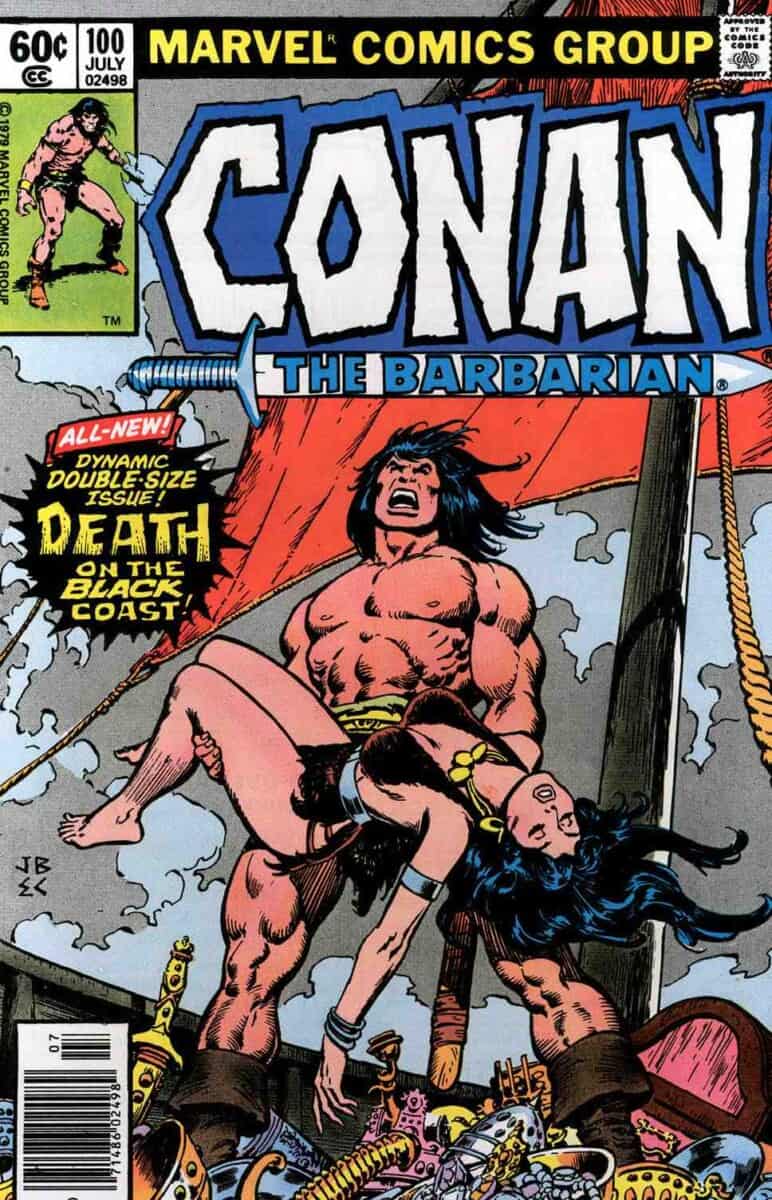
Expands their legend and gives a broader sense of their reign on the Black Coast. - #100 – “Death on the Black Coast”
Climactic adaptation of the Zarkheba expedition and Bêlit’s ghostly return.
If you want the bare minimum comics for the corsair era, start here – Conan Original Comics Omnbous vol. 3 and Conan Omnibus vol. 4.
2. Expanded Marvel Corsair Cycles – The Pirate Legend Grows
Conan the Barbarian (Marvel) #60–63, #70–71, #74–81, #84–90, #94–97
Highlights include:
- #60–63 – “Riders of the River-Dragons” / “Coming of Amra”
Deep dive into day-to-day corsair life and the rise of Amra as a mythic figure. - #70–71 – “City in the Storm” / “Marchers of Valhalla”
Storms, supernatural forces and a stronger sense of cosmic stakes around Bêlit’s raids. - #74–81, #84–90 – Stygian and hawk-rider arcs
River voyages, religious intrigue and clashes with Set’s followers. - #94–97 – “The Return of Amra” / “Long Night of Fang and Talon”
Post-Bêlit stories in Abombi, where Conan’s corsair past catches up with him.
These issues are perfect for readers who want to see Marvel expand a single Howard story into a whole phase of Conan’s life.
I’ve written reviews of some of these individual issues and they are so much fun to read. This era of Marvel’s Conan the Barbarian was just excellent.
Check these out:
- Sorceress of the Swamp #82 Review
- The Dance of the Skull #83 Review
- Two Against The Hawk City # 84 Review
- Swords Against Stygia #85 Review
3. Contemporary Corsair Echoes – Titan Comics
Conan the Barbarian (Titan, 2023+) – “Thrice Marked for Death” & other upcoming arcs
Titan doesn’t re-adapt “Queen of the Black Coast” directly, but:
- Uses Bêlit-centred flashbacks and scars from the Black Coast as emotional fuel in “Thrice Marked for Death”.
- Has new arcs bringing Conan and Bêlit back into focus.
These issues serve as a bridge between the classic corsair tales and the ongoing Conan series. I’m really enjoying the current run. The writer, Jim Zub, has a real gift for blending the spirit and plots of the original stories with fresh adventures and new details.
4. Dark Horse’s Queen of the Black Coast
Conan the Barbarian (Dark Horse, Brian Wood) #1–3, #22–25
Next we move on to the worst Conan comics ever created. In my humble opinion, of course.
Here we have a skinny, emo Conan who is lovesick and missing (an ugly) Bêlit so much he turns helpless. I still can’t believe these comics were ever given the green light.
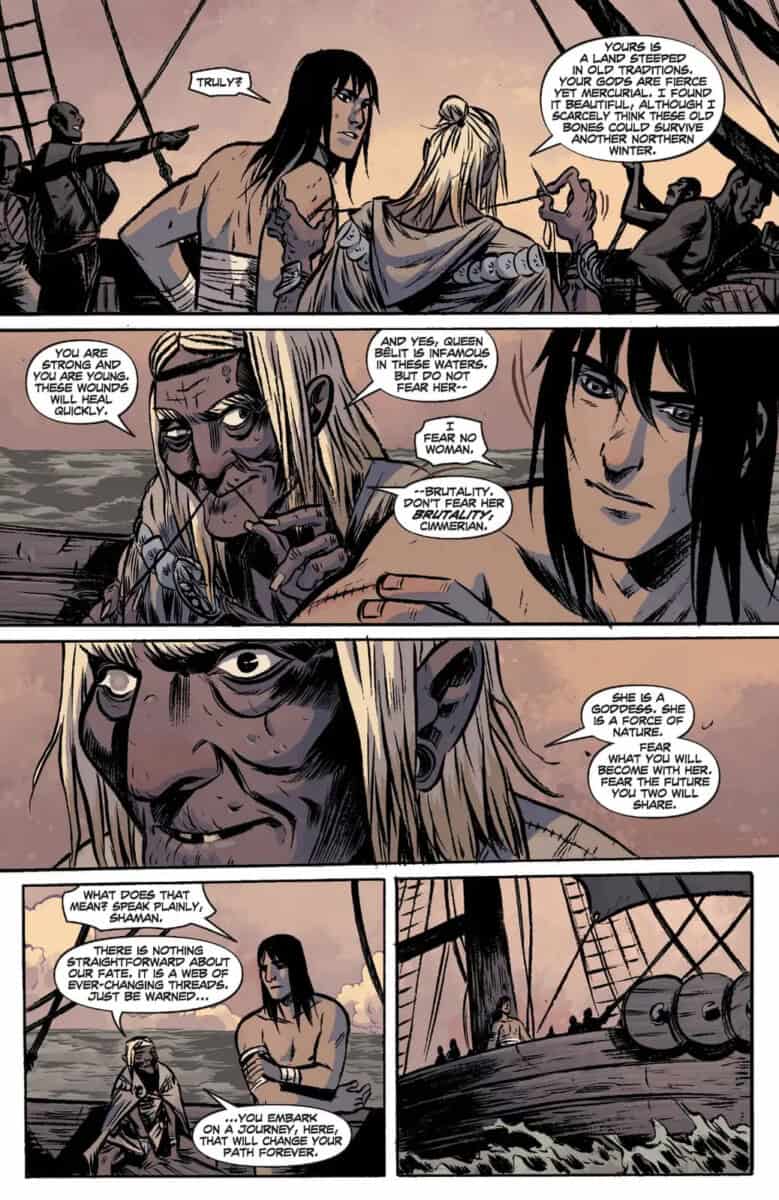
Still, not everyone feels the same way I do, and it would be unfair to not give the same chance to read them.
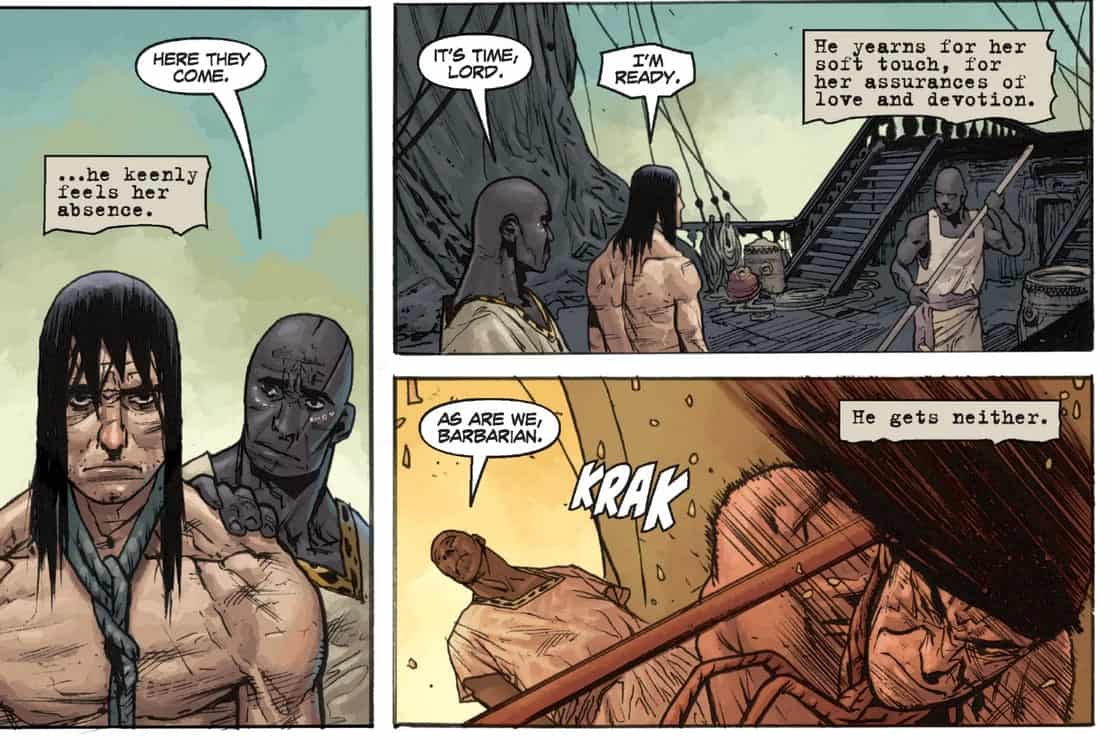
I’m quite sure Robert E Howard would never have signed off ‘Conan yearning for her assurances of love and devotion.’ Utter tripe.
Thankfully they’re not easy to get hold off at the moment but the best way is probably The Conan Chronicles Epic Collections, starting with Horror Beneath The Stones.
5. Ablaze – The Cimmerian.
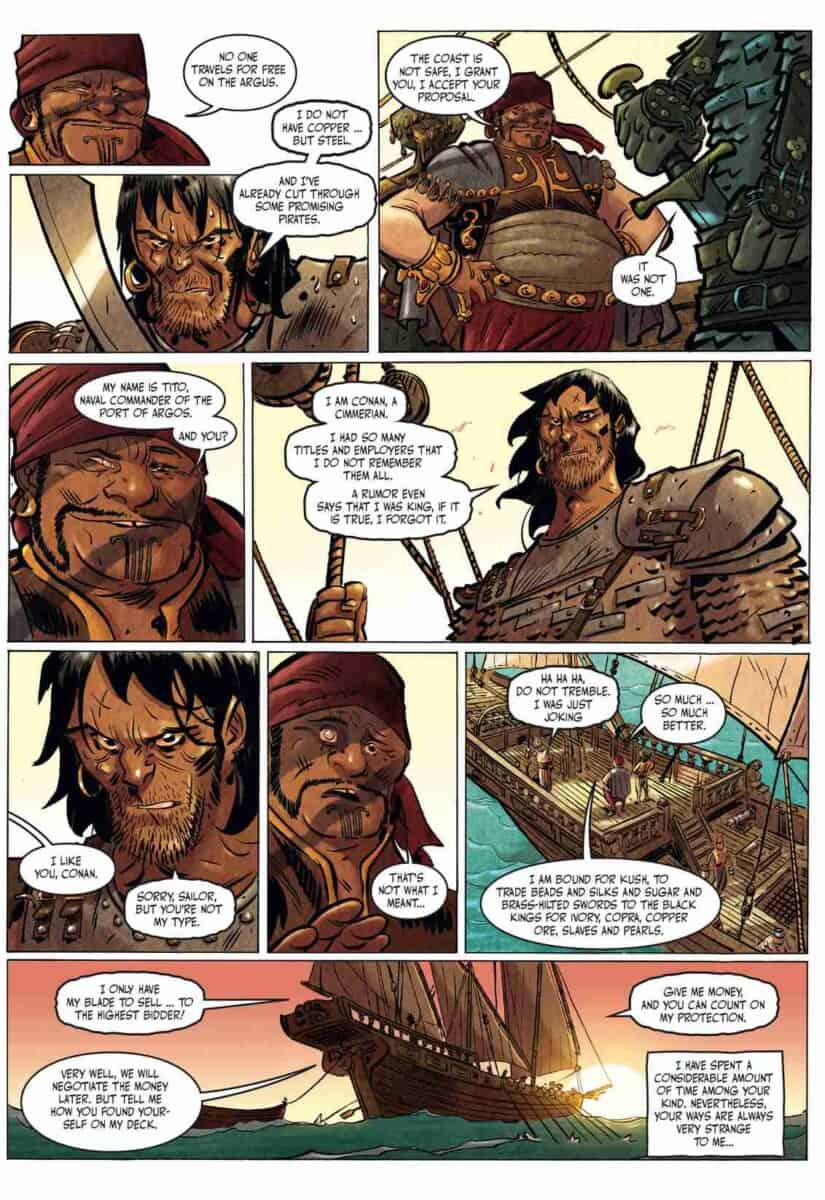
This version of Queen of the Black Coast is racy and well-written – if you can get past the art. It’s European and not for everyone. I’ve found for some pages it works well, and terribly for others. Your mileage may vary.
Corsair Echoes in the 1982 Film – Valeria as a Bêlit Parallel
I’m a big fan of the 1982 Conan film. I watched it many times as a teenager then kind of forgot about it until about ten years ago, where they were showing it at my local cinema in Germany. I watched it once more and went down the deep, deep rabbit hole that led to me writing this very post (and a whole lot more!).
The film Conan the Barbarian doesn’t adapt “Queen of the Black Coast” directly, but Valeria effectively fills Bêlit’s emotional role.
Key Parallels
- Warrior lover as equal: Valeria, like Bêlit, meets Conan as a rival turned ally. She is a skilled fighter who stands beside him, not behind him.
- All-consuming partnership: Their relationship combines shared danger, passion and mutual respect, echoing the intensity of Conan and Bêlit’s romance.
- Death and supernatural return: Valeria dies to save Conan from Doom’s forces, then returns briefly in spectral form during his darkest battle – just as Bêlit returns from beyond the grave to save Conan from the winged demon in “Queen of the Black Coast”.
Why This Matters
For many viewers, the film is their first exposure to Conan (me included, all those years ago!). Valeria gives them an emotional arc that mirrors what Bêlit represents in the prose and comics.
Even without naming Bêlit, the film captures the core idea of the corsair era: a warrior woman whose love and loyalty to Conan cross the boundary of death.
Where the Corsair Era Fits in Conan’s Life
In most chronologies, the corsair era sits roughly in Conan’s early to mid-twenties and follows a clear developmental arc:
- Cimmerian Youth
- Thief Era
- Mercenary Era
- Corsair Era
- Wanderer Era
- Pirate
- Freebooter
- Soldier / General
- King Conan
Understanding the corsair era in this chain helps new readers know where to slot their reading and why Conan behaves differently here than in thief, mercenary or king phases.
A Wrap-up of the Corsair Era
The corsair era shows Conan at his most emotionally vulnerable and most fiercely alive. I think it’s the only phase where love sits on the same pedestal as battle. It’s where he learns that grief can cut deeper than steel, and that loyalty can push someone to defy even death.
For new readers, it’s a perfect entry point: a self-contained tragedy with clear stakes. For anyone studying sword and sorcery, it’s living proof that pulp adventure can carry real emotional and literary weight.