Who is Mitra? The God of Light in Conan’s World – Explained

Disclosure: This post is reader-powered and contains affiliate links. If you click through and make a purchase, I may earn a commission at no additional cost to you.
Table of Contents
If the god Set is the shadow over the Hyborian Age, Mitra is the light.
He’s the dominant god of civilisation, worshipped across Aquilonia, Nemedia, Ophir, Brythunia, Corinthia, and Zingara – essentially every major Hyborian kingdom. Where Set demands blood, Mitra asks for virtue.
Where serpent worship lurks in crypts and shadows, Mitra’s temples stand proudly in city centres, their simple architecture a deliberate rejection of the ornate horror of eastern faiths.
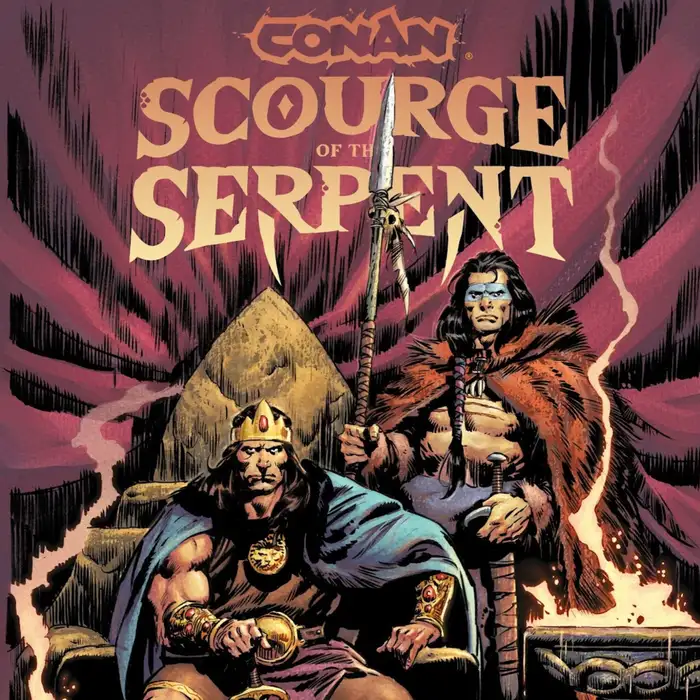
I’d quickly take this point to recommend the Scourge of the Serpent mini series, I enjoyed it from start to finish. The reading order for Scourge of the Serpent is here.
What fascinates me about Mitra is how Howard uses him to explore the intersection of religion and civilisation. Mitra represents everything the Hyborian kingdoms believe makes them superior to their neighbours – mercy, truth, restraint.
But Howard doesn’t let this go unexamined. Mitraic priests can be intolerant bigots, persecuting Asuran worshippers with the same zeal they condemn in Set’s followers. Civilisation’s god, Howard suggests, isn’t necessarily civilised in his followers.
Howard’s Original Vision
Mitra appears throughout the Conan stories as the primary “good” deity, but he’s more complex than that label suggests.
Howard drew the name from the historical Mithra – the Zoroastrian god of covenants and light who later inspired the Roman Mithras cult – but created something distinctly his own.
In Howard’s world, Mitra represents a deliberate contrast to every other religion. His rites alone in the Hyborian era include no blood sacrifice whatsoever – not even animals.
His temples are deliberately plain, featuring little iconography except a single statue of the god depicted as an idealised bearded man. His priests teach forgiveness of enemies, though Howard acidly notes that “many of them fail to do so.”
The key text for understanding Mitra is Howard’s essay “The Hyborian Age,” where he describes the god’s worship as effectively the state religion of the Hyborian nations corresponding to Western Europe.
Mitra’s faith is missionary – his followers sometimes die trying to spread their religion to hostile peoples. It’s Christianity with the serial numbers filed off, transplanted into a prehistoric setting.
When Mitra Actually Intervenes
Unlike Crom, who gives his people nothing but courage at birth, Mitra occasionally involves himself in mortal affairs. The most significant example occurs in “Black Colossus,” where Princess Yasmela of Khoraja faces an ancient sorcerer-king threatening to destroy her nation.
In her desperate hour, Yasmela prays in Mitra’s temple – and the god answers. A voice speaks from the darkness, directing her to go to the city gates and choose the first man she meets as her champion and commander. That man turns out to be Conan.
This intervention changes everything for Conan. He’s commanded tens of thousands of soldiers in a historically important battle, emerging victorious against impossible odds. It’s an important step on his path to eventually becoming King of Aquilonia.
From Mitra’s perspective, the barbarian was evidently the best choice to defeat a sworn enemy of the Hyborian kingdoms – even if his own priests might have preferred someone more conventionally pious.
I find this fascinating because it shows Howard’s nuanced approach to religion. Mitra doesn’t choose a devout worshipper or a Hyborian nobleman. He chooses a Cimmerian barbarian who worships a completely different god. Divine wisdom, it seems, values effectiveness over orthodoxy.
It’s a great story, Black Colossus and it should definitely be read. It’s in the Coming of Conan book by Del Rey, among others.
The Darker Side of Mitra Worship
Howard wasn’t interested in presenting Mitra as simply “the good god” without complication. In “The Hour of the Dragon,” we see Mitraic priests actively persecuting followers of Asura, another deity whose worshippers seek truth and enlightenment.
Conan, being a barbarian, doesn’t share this “civilised” prejudice. He protects Asuran worshippers from Mitraic persecution, and they prove beneficial allies in his hour of need.
It’s a pointed commentary on religious intolerance – the followers of the “merciful” god proving less merciful than the “savage” barbarian.
The Mitraic religion also practices a form of hell. Mitra judges souls after death, consigning sinners to punishment.
For a god whose followers preach forgiveness, this creates an interesting tension that Howard never fully resolves. I think the ambiguity is intentional – Howard was too smart a writer to create a straightforwardly “good” religion.
Mitra’s Temples and Worship
Mitraic temples stand out for their deliberate simplicity. Where other faiths build ornate shrines filled with imagery and idols, Mitra’s temples are “awesomely plain, yet stately, artistic and beautiful despite the lack of ornate symbols.”
This aesthetic simplicity serves theological purpose. Unlike the Shemites who believe their gods inhabit their brass idols, Mitraists understand that Mitra is omnipresent – the statues are merely representations, not dwelling places.
It’s a more abstract, philosophical approach to divinity that Howard associates with civilised sophistication.
Mitraic priests are trained in many practical skills beyond theology – smithwork, carpentry, stonework, diplomacy.
The religion functions as a civilising force, spreading knowledge alongside faith. This practical dimension helps explain why Mitra worship dominates the most advanced kingdoms.
Mitra’s Eternal Enemy: Set
The conflict between Mitra and Set forms the theological backbone of the Hyborian Age. Where Mitra represents light, truth, and civilisation, the god Set embodies darkness, deception, and the ancient predatory aspects of worship. Their followers engage in a cosmic struggle that plays out across the stories.
In Howard’s cosmology, Mitra protects the righteous from the demonic forces of Set. The priest Epemitreus, who appears to Conan in “The Phoenix on the Sword,” spent his entire long life fighting Set’s influence.
Even in death, his spirit continues the struggle, marking Conan’s sword with Mitra’s phoenix symbol to destroy a demon sent by Set’s follower Thoth-Amon.
This isn’t mere mythology within the story – it’s active supernatural conflict. The Heart of Ahriman, the phoenix symbol, holy water from sacred rivers – these Mitraic tools genuinely work against evil in Howard’s world.
Mitra in the Comics
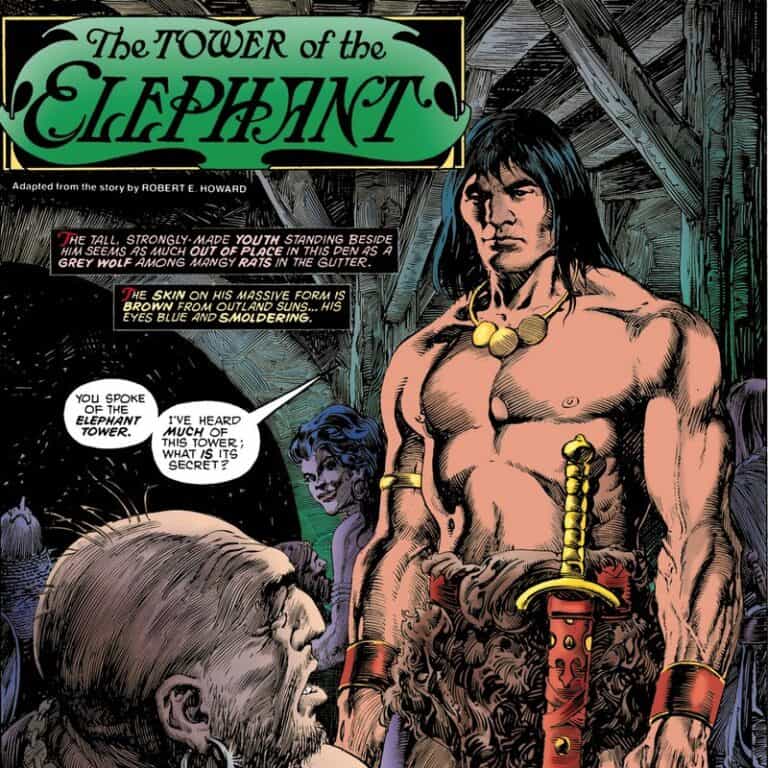
Marvel’s Conan comics expanded Mitra’s role considerably. The god appears more directly, his priests wield genuine magical power, and the conflict with Set becomes even more explicit.
Roy Thomas, who adapted Howard’s work for Marvel, maintained the essential character of Mitra while adding visual elements like the horned cross symbol (resembling an ankh) that became associated with the faith.
The comics also established Mitra as part of the Elder Gods hierarchy, connecting him to the broader Marvel Universe cosmology. While this goes beyond Howard’s original conception, it did help cement Mitra as a genuinely divine being rather than merely a cultural construct.
Mitra in Conan Exiles
In Conan Exiles, Mitra is one of the selectable religions at character creation. His worship focuses on virtue and healing, with unique items that reflect his benevolent nature.
The most useful Mitra item is Ambrosia – a healing consumable that’s incredibly easy to craft. You make it using resources harvested from human corpses with the Mitraic ankh tool, which provides “lingering essence” and “unblemished human meat.”
Yes, even the god of light apparently doesn’t mind if you harvest corpses – though at least he doesn’t require you to eat them like Yog does.
At higher tiers, Mitra provides the Feast to Mitra (offering health regeneration and stat bonuses) and eventually the ability to summon his avatar – a towering bronze colossus that can devastate enemy bases.
What I appreciate about Conan Exiles’ Mitra is how it captures the transactional nature of Hyborian religion while maintaining Mitra’s distinct character.
You’re still performing morally questionable acts to gain religious favour, but the rewards are healing and protection rather than venom and death.
Why Mitra Matters
Mitra serves multiple functions in Howard’s fiction. On one level, he’s simply the “good god” opposing Set’s evil. On another, he’s a tool for examining how civilised people can be just as cruel as barbarians while believing themselves morally superior.
I think Howard’s Mitra is ultimately a commentary on organised religion in general. The god himself seems genuinely benevolent – he answers prayers, protects the righteous, opposes evil.
But his followers are human, with all the pettiness, intolerance, and hypocrisy that implies. The faith teaches forgiveness, but practitioners often fail to practice what they preach.
This nuanced treatment elevates Howard’s work beyond simple good-versus-evil fantasy. Mitra isn’t just “the god the heroes worship.” He’s a lens through which Howard examines religion, civilisation, and the gap between what people believe and how they behave.
Related Reading
- Gods of the Hyborian Age – Complete Guide
- Who is Crom? Conan’s God Explained
- Who is Set? The Serpent God Explained
- Where is Stygia? The Land of Set
- Bel, God of Thieves
Frequently Asked Questions
Does Conan worship Mitra?
No. Conan worships Crom, the grim god of Cimmeria. However, Conan respects Mitra and even protects his worshippers on occasion. Interestingly, Mitra chooses Conan as his champion in “Black Colossus” despite Conan following a different god entirely.
Is Mitra based on a real god?
Howard drew the name from Mithra, the Zoroastrian deity of covenants and light who later inspired the Roman mystery cult of Mithras. However, Howard’s Mitra is distinctly his own creation, functioning more like a proto-Christian god than like the historical Mithra.
Does Mitra ever appear directly in the stories?
Mitra speaks to Princess Yasmela in “Black Colossus,” and his influence is felt through artifacts like the Heart of Ahriman and the phoenix symbol. The spirit of Epemitreus, a long-dead Mitraic sage, appears to Conan in “The Phoenix on the Sword.” However, Mitra himself doesn’t physically manifest the way some other supernatural beings do.
What’s the difference between Mitra and Asura?
Both are generally benevolent deities, but they differ significantly. Mitra is the dominant, established religion of the Hyborian kingdoms with grand temples and state support. Asura is a mystery cult whose followers worship in secret, seeking truth beyond illusion. Mitraic priests persecute Asurans despite both faiths being relatively peaceful.
Is Mitra good in Conan Exiles?
Mitra is excellent for new players. Ambrosia provides reliable healing that’s easy to craft, and the religion doesn’t require any morally questionable practices beyond harvesting corpses (which every religion requires). The Mitra avatar is also one of the more visually impressive summons in the game.
How do I learn Mitra in Conan Exiles?
You can select Mitra during character creation, learn it from Muriela the Artisan (found in the Exiled Lands), spend 50 Knowledge points in the religion section, or find the religious artifact associated with Mitra.