Who is Valeria? Conan’s Fiercest Female Warrior – Explained

Disclosure: This post is reader-powered and contains affiliate links. If you click through and make a purchase, I may earn a commission at no additional cost to you.
Table of Contents
“Do you want to live forever?”
Valeria asks this question in the 1982 film before charging into battle alongside Conan. It’s the perfect line for a character who represents everything Robert E. Howard admired: fierce independence, martial skill, and absolute refusal to be anyone’s plaything.
But here’s what many fans don’t realise – the film’s Valeria is actually a combination of two different Howard women. The literary Valeria from “Red Nails” is quite different from the character Sandahl Bergman brought to screen, who borrows heavily from another Howard creation: Bêlit, Queen of the Black Coast.
I think understanding both versions reveals a lot about how Howard wrote women – and why Valeria remains one of sword-and-sorcery’s most memorable heroines.
Valeria in Robert E. Howard’s “Red Nails”
Valeria of the Red Brotherhood appears in “Red Nails,” the final Conan story Howard ever wrote. The novella was serialised in Weird Tales from July to October 1936, published posthumously after Howard’s suicide that June. It’s considered one of his finest works. You can find it in The Conquering Sword of Conan.
Howard described Valeria with characteristic vividness:
“She was tall, full-bosomed, and large-limbed, with compact shoulders. Her whole figure reflected an unusual strength, without detracting from the femininity of her appearance. She was all woman, in spite of her bearing and her garments.”
What I love about this description is how Howard refuses to make her masculine just because she’s a warrior. Valeria is explicitly feminine and explicitly deadly – she sees no contradiction between the two.
Her outfit tells you everything about her character: wide-legged silk breeches, flaring-topped boots, a low-necked silk shirt, and both a straight double-edged sword and a long dirk at her hips. She’s dressed for fighting and for herself, not for anyone else’s approval.
A History of Refusing to Submit
According to “Red Nails,” Valeria was a member of the Red Brotherhood – the Hyborian Age’s most notorious band of pirates operating along the coasts of Stygia and Kush. She earned her reputation among some of the most dangerous men alive.
Her immediate backstory involves fleeing trouble (as Conan characters often do):
- Red Ortho – A pirate king who wanted her as his mistress. Valeria’s response? She jumped overboard and swam for the Kushite coast rather than submit.
- Zarallo’s Free Companions – She joined this mercenary company guarding Stygia’s southern borders, but a Stygian officer thought she’d make a better bedwarmer than soldier.
- The Stygian Officer – He pressed his advances. She stabbed him. She fled south.
I find this pattern revealing. Howard shows us a woman who has repeatedly faced men trying to possess her, and who has consistently chosen violence and exile over submission. This isn’t backstory for its own sake – it tells us exactly who Valeria is before the main action begins.
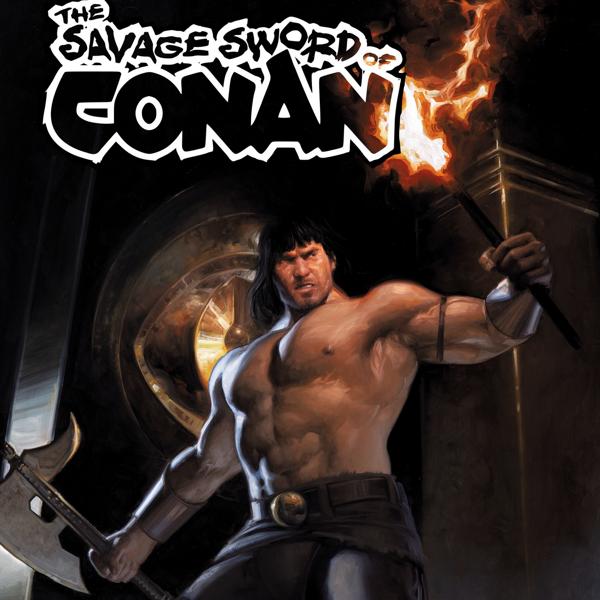
In the current Conan comics, there is also a sequel to Red Nails by Pat Zircher in Savage Sword of Conan #9.
She Wasn’t Impressed by Conan
Here’s where things get interesting. Unlike the film, literary Valeria is not Conan’s lover when “Red Nails” begins. Quite the opposite – Conan is pursuing her, and she’s not having it.
When they first appear together, Conan has tracked her into the southern jungles precisely because he desires her. Valeria greets this with a drawn sword and genuine hostility:
“I’m not going to be any man’s plaything.”
Howard makes clear that Valeria rebuffs Conan’s initial advances. She’s not impressed by his reputation, his muscles, or his persistence. She judges men by whether they’re useful, not whether they want her.
What changes their dynamic is mutual danger. A dragon (actually a dinosaur with characteristics of both Stegosaurus and Allosaurus) attacks their horses. Suddenly they’re stuck together, survivors who need each other to reach the mysterious city on the horizon.
Throughout the story, Valeria remains Conan’s equal rather than his prize. She fights beside him, makes her own decisions, and is told much of the story from her point of view – unusual for the Conan tales.
By the end of “Red Nails,” after surviving the horrors of Xuchotl, they do become lovers. But it’s on her terms, after she’s seen what kind of man Conan truly is. The final lines promise they’ll return to the seas “to show the world what plundering means” – partners in adventure, not damsel and rescuer.
What Makes Valeria Special
Howard scholar E. F. Bleiler called “Red Nails” “among the better Conan stories,” and Valeria is central to why it works. That being said, I’d argue all the Conan stories are ‘better stories’!
She’s a POV character. Much of “Red Nails” is told from Valeria’s perspective, letting readers see both the madness of the city-dwellers and Conan’s “primordial fury” through civilised eyes.
She’s genuinely dangerous. Howard writes that she was “stronger than the average man, and far quicker and more ferocious.” When combat comes, she kills efficiently and without hesitation.
She has agency. Valeria makes decisions throughout the story. She chooses to enter Xuchotl, chooses her alliances, and acts on her own judgment.
She’s flawed. Valeria can be reckless and hot-tempered. She ends up captured and in need of rescue – but so does Conan at other points in Howard’s stories. Neither is invincible.
In my opinion, Valeria represents one of Howard’s most successful attempts at writing a female warrior who feels like a complete character rather than a prize to be won.
The Other Half of Film Valeria: Bêlit
To understand the 1982 film’s version of Valeria, you need to know about Bêlit, Queen of the Black Coast.
Bêlit appears in “Queen of the Black Coast” (1934), often considered Howard’s finest Conan story. She’s a Shemite pirate queen who commands a crew of black warriors from the Tigress, terrorising the coastlines of Kush and Stygia.
Unlike Valeria, Bêlit falls for Conan instantly. Upon seeing him fight, she declares:
“I am Bêlit, queen of the black coast. Oh, tiger of the North, you are cold as the snowy mountains which bred you. Take me and crush me with your fierce love! Go with me to the ends of the earth and the ends of the sea!”
Bêlit is passionate, avaricious, and commands absolute loyalty from her crew. She and Conan spend years together pillaging the coast before tragedy strikes in a haunted city. A winged monster kills her – but she makes Conan a promise:
“Were I still in death and you fighting for your life, I would come back from the abyss to aid you.”
She keeps that promise. Bêlit’s ghost returns to save Conan from the monster that killed her. Very similar to Valeria returning in the film.
The 1982 Film: Merging Two Characters
Sandahl Bergman’s Valeria in the 1982 film is really a fusion of both women:
From Valeria:
- The name
- The profession (thief/mercenary rather than pirate queen)
- The initial reluctance about Conan
- The swordsmanship
From Bêlit:
- The deep romantic relationship with Conan
- The promise to return from death
- The ghostly return to save Conan in battle
- The status as Conan’s “true love”
The film handles this fusion brilliantly. We first meet Valeria in Zamora, where she and Conan become lovers and partners in crime along with Subotai. Their relationship develops naturally, avoiding both Bêlit’s instant passion and literary Valeria’s prolonged resistance.
When Valeria is killed by Thulsa Doom’s snake-arrow, her death devastates Conan – exactly as Bêlit’s death devastates him in “Queen of the Black Coast.” And like Bêlit, film Valeria returns from beyond death to save Conan during the Battle of the Mounds.
“Do you want to live forever?” becomes her eternal question – a warrior who chose mortality over immortality, death over dishonour, and love over safety.
Sandahl Bergman Earned Those Awards
Sandahl Bergman won both a Golden Globe (New Star of the Year) and a Saturn Award (Best Actress) for playing Valeria. Her performance deserves the recognition.
A professional dancer who worked with Bob Fosse, Bergman brought physicality and grace to the role that few actresses could match. At 6 feet tall and genuinely athletic, she’s believable as a warrior who fights beside Conan as an equal.
Because no stunt women matched her size, Bergman performed all her own stunts. As she later recalled: “It was tough. I nearly lost a finger. Arnold smashed his head against a rock. But that was nothing compared to what the stuntmen went through.”
What I appreciate most about her performance is the emotional range. Bergman’s Valeria isn’t just a fighter – she’s someone who has clearly lived hard and found something worth protecting in her relationship with Conan. Her concern about whether revenge against Thulsa Doom is worth dying for feels genuine.
The scene where she offers to stay with Conan rather than pursue vengeance, declaring “All the gods, they cannot sever us,” contains more emotional truth than most sword-and-sorcery romances manage.
Valeria’s Legacy
Is Valeria a good character? I think she’s one of Howard’s best – and she’s influenced sword-and-sorcery heroines for decades:
Red Sonja – The “She-Devil with a Sword” was created for Marvel’s Conan comics, drawing inspiration from both Valeria and another Howard character (Red Sonya of Rogatino from a non-Conan story). Red Sonja: Consumed review here.
Modern Fantasy Heroines – Characters like Brienne of Tarth owe something to Howard’s template of the warrior woman who refuses traditional feminine roles but remains distinctly female.
Video Game Characters – Valeria appears in Age of Conan: Hyborian Adventures and influences countless female warrior designs.
In my opinion, what makes Valeria endure is that Howard avoided the obvious traps. She’s not a man with breasts. She’s not defined solely by her relationship to Conan. She’s not rescued so often that her combat skills seem like a joke. She’s simply a dangerous, complicated person who happens to be female – exactly what a good character should be.
Where to Experience Valeria
For Howard’s original, The Conquering Sword of Conan from Del Rey contains “Red Nails” with the unedited text. Is “Red Nails” worth reading? It’s genuinely one of Howard’s best – darker and more psychologically complex than most Conan tales, with Valeria as a proper co-protagonist rather than a damsel. You can also read it free on Project Gutenberg.
For the 1982 film, the 4K UHD is the best way to see Sandahl Bergman’s Golden Globe-winning performance. Is the film worth watching for Valeria specifically? Yes – she’s not just a love interest but a genuine partner to Conan, and her death scene remains one of the most affecting moments in sword-and-sorcery cinema. The Blu-ray or Conan dvd are also excellent if you’re on a budget.
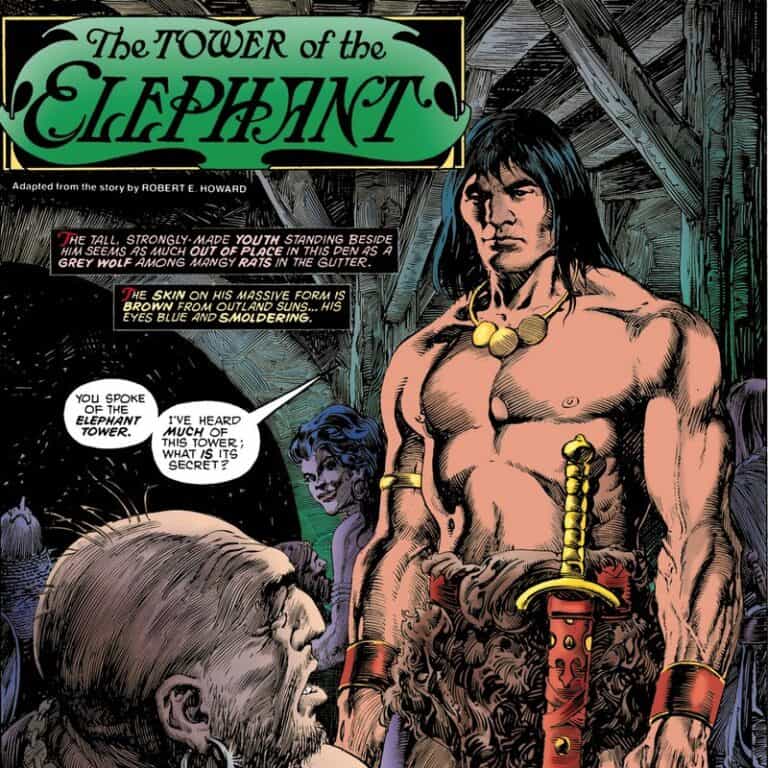
For comics, Barry Windsor-Smith’s adaptation of “Red Nails” in Savage Tales #2–3 is stunning, and Marvel’s recent Age of Conan: Valeria provides an origin story. I haven’t read it myself but it’s supposed to be pretty average.
If you want to understand the other half of film Valeria, read “Queen of the Black Coast” featuring Bêlit – also in the Del Rey collections. The recent novel Conan: Blood of the Serpent serves as a prequel to “Red Nails” showing how Conan and Valeria first met. It was pretty good.
Island of Pirates’ Doom was an entertaining six part comic running through the Savage Sword of Conan Volume 6 Omnibus and I would definitely recommend it!
Frequently Asked Questions
Is Valeria the same character in the books and the film?
Not exactly. The film’s Valeria combines elements of two Howard characters: Valeria from “Red Nails” and Bêlit from “Queen of the Black Coast.” The name and some personality traits come from Valeria, while the romance with Conan and the return from death come from Bêlit.
Does Valeria die in the original story?
No. Literary Valeria survives “Red Nails” and leaves with Conan planning to become pirates together. Only film Valeria dies (borrowing Bêlit’s fate from “Queen of the Black Coast”).
Who was Conan’s greatest love – Valeria or Bêlit?
In Howard’s stories, Bêlit is explicitly Conan’s great love. They spend years together, and her death devastates him. Literary Valeria appears in only one story and their relationship, while significant, is briefer. The 1982 film essentially gives Valeria the emotional weight of Conan’s relationship with Bêlit.
Was Sandahl Bergman a real athlete?
She was a professional Broadway dancer who trained extensively with Bob Fosse. For Conan, she learned sword fighting and performed all her own stunts. Her dance background gave her the physicality and grace the role required.
Does Valeria appear in Conan the Destroyer?
Only briefly, in a vision. The sequel features a different female lead (played by Olivia d’Abo) since Valeria died in the first film.
How does Valeria compare to Red Sonja?
They’re different characters. Red Sonja was created by Roy Thomas for Marvel Comics, inspired partly by Valeria and partly by Red Sonya of Rogatino from Howard’s non-Conan story “The Shadow of the Vulture.” Interestingly, Sandahl Bergman played the villain Queen Gedren in the 1985 Red Sonja film rather than the title character – she was offered the lead but chose the more interesting villain role.
Related Reading
- Who is Thulsa Doom? Conan’s Most Famous Villain Explained – The man who killed Valeria
- Cimmeria: Conan’s Homeland Explained
- Who is Crom? Conan’s God Explained
- Best Music for Reading Conan – Includes the 1982 soundtrack
- Stygia: The Serpent Kingdom Explained