Stygia: Conan’s Egypt-Coded Land of Sorcery

Disclosure: This post is reader-powered and contains affiliate links. If you click through and make a purchase, I may earn a commission at no additional cost to you.
There’s a reason Conan never quite trusts sorcerers, and much of that reason can be traced to one kingdom – Stygia, the ancient land of serpents and black magic that lurks south of the Hyborian nations like a shadow over the entire age.
The Egypt of Howard’s World
Robert E. Howard made no secret of Stygia’s inspiration. This is ancient Egypt filtered through a pulp fantasy lens – pyramids, priest-kings, and a civilisation so old it makes the Hyborian kingdoms look like upstarts. I think Stygia represents everything Howard found simultaneously fascinating and terrifying about ancient civilisations: their power, their mystery, and their inhuman cruelty.
Stygia occupies a vast territory south of Shem and west of the eastern deserts. The kingdom centres on the great River Styx (yes, Howard borrowed liberally from mythology), with its capital Luxur rising from the banks in a mass of temples, palaces, and monuments to the serpent god Set. In my opinion, Howard’s geography here is deliberately evocative – he wanted readers to instantly picture something ancient, exotic, and dangerous.
The Shadow of Set
You cannot discuss Stygia without discussing Set. The serpent god dominates every aspect of Stygian life, from the highest priest to the lowest slave.
Set worship involves human sacrifice, dark sorcery, and rituals that Howard wisely left to the imagination.
I would say the genius of Howard’s approach is how he made Set genuinely alien and malevolent – this isn’t a misunderstood deity but something fundamentally opposed to human flourishing.
The priesthood of Set wields enormous power in Stygia. In many ways, the priests are the true rulers, with the kings serving as their instruments.
This theocratic structure gives Stygia a different character from the Hyborian kingdoms, where religion exists but doesn’t entirely dominate political life. In Stygia, the political and the religious are inseparable.
I think Howard understood something profound about the nature of oppressive systems. Stygian society is rigidly hierarchical, with the priests at the top, the aristocracy below them, and the masses existing in something close to slavery.
The worship of Set justifies and perpetuates this hierarchy – a dark mirror of how state religions have functioned throughout human history.
Geography and Climate
Stygia’s landscape reinforces its character. The fertile Styx valley supports a large population, but beyond the river lies harsh desert. To the south, the land eventually gives way to the Black Kingdoms – a transition zone where Stygian influence fades but never quite disappears.
I’d also recommend a read of Kush, on Stygia’s border. It’s another fascinating country in Robert E Howard’s grand world-building.
The cities of Stygia are ancient beyond reckoning. Luxur, Khemi, and Kheshatta have stood for thousands of years, their stones infused with accumulated centuries of dark magic.
I would argue that Howard’s Stygian cities feel genuinely old in a way many fantasy settings fail to achieve. When Conan walks their streets, he walks through history made manifest.
The climate is hot and dry, except along the river. This environment shapes Stygian culture – the architecture designed for heat, the clothing adapted to the climate, the economy dependent on the Styx’s annual floods.
In my opinion, these details ground Stygia in something recognisably real even as Howard piles on the supernatural elements.
Sorcery and the Black Ring
If the Hyborian Age has a centre of magical learning, it’s Stygia. The greatest sorcerers are Stygian-trained, and the kingdom jealously guards its mystical secrets.
Kheshatta, the City of Magicians, exists solely as a place of magical study and practice – imagine an entire city of wizards, and you’ll understand why Conan avoids the place.

Above: Kheshatta, and featured in this issue and review of Swordsmen and Sorcerers.
Stygian magic tends toward the dark and serpentine. Transformation, summoning, and necromancy feature prominently in the stories.
I think Howard used Stygian sorcery to represent the dangerous allure of forbidden knowledge – the power is real, but the price is your humanity.
The Black Ring, a cabal of Stygian sorcerers, appears in stories as behind-the-scenes manipulators.
They meddle in the politics of other kingdoms, always serving Set’s mysterious agenda. In my view, the Black Ring represents Howard’s suspicion of secret societies and hidden powers – forces that shape the world whilst remaining invisible to ordinary people.
Stygia in the Conan Stories
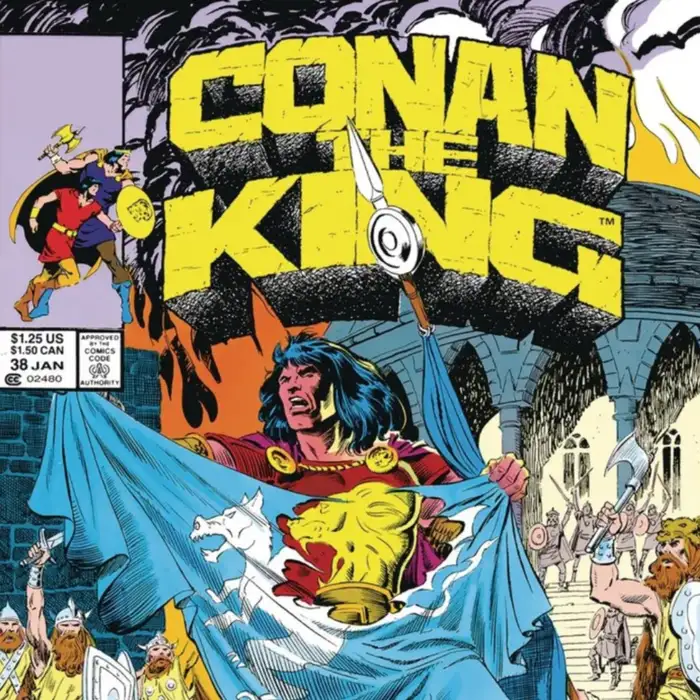
Several key Conan tales feature Stygia prominently. “The Hour of the Dragon” involves Stygian magic as a crucial element of the plot against King Conan. You can find it included in The Bloody Crown of Conan from Del Rey.
I absolutely love this story, and the thought of a country with a city that has huge snakes slithering around, allowed to eat anyone they want, is both fascinating and horrifying. I’m glad Conan doesn’t take any crap from them though.
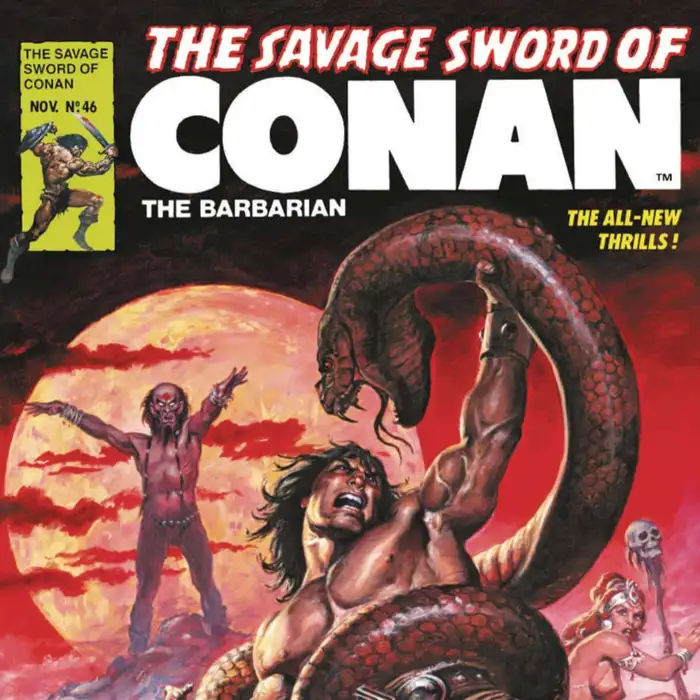
In the comics, there’s a fairly long arc set in Stygia in the Original Comics Years with Conan and Belit, and it’s very good.
“The God in the Bowl” introduces readers to the horrifying nature of Set worship. And various other stories see Conan tangling with Stygian sorcerers, priests, and monsters.
I would say Stygia functions as the ultimate Other in Howard’s world.
When he needed an ancient evil or a dark conspiracy, Stygia provided. This isn’t to say Howard depicted Stygia simplistically – he gave the kingdom genuine grandeur and awful beauty alongside its horrors.
Conan himself harbours a particular distrust of all things Stygian. His Cimmerian practicality clashes utterly with Stygian mysticism, and his experiences with Stygian sorcerers have uniformly been negative.
In my opinion, this personal animosity adds stakes to any story involving Stygia – we know Conan is operating in enemy territory in more than just the geographical sense.
Themes and Deeper Meanings
Howard used Stygia to explore themes of decadence, corruption, and the dangers of civilisation taken too far.
The Stygians have incredible knowledge and power, but they’ve purchased it through millennia of human sacrifice and spiritual degradation. I think Howard was asking whether some prices are too high, regardless of what they buy.
There’s also a theme of time and decay running through the Stygian stories. Stygia is ancient, and Howard repeatedly emphasises that its best days may be behind it.
The kingdom persists through sheer accumulated power and the inertia of millennia, but there’s a sense of something rotten at the core. In my view, this makes Stygia more interesting than a simply powerful enemy – it’s a warning about what civilisations can become.
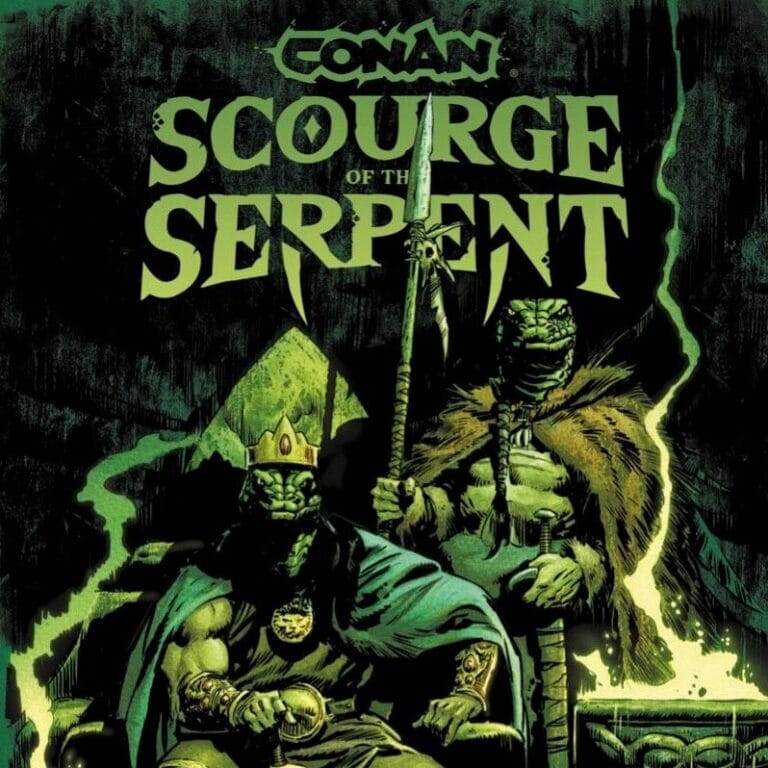
I just finished Spawn of the Serpent God by Tim Waggoner and really enjoyed it. Although the story isn’t set in Stygia itself, several of the characters are Stygian and Set features a prominent role. It’s also a part of the Scourge of the Serpent reading order.
The Lasting Influence
Stygia established a template that countless fantasy works have followed. The ancient, Egypt-inspired kingdom of dark magic is now a genre staple, but Howard did it first and – in my opinion – still did it best. His Stygia feels genuinely threatening and genuinely old in ways that many imitators fail to capture.
For Conan fans, understanding Stygia enriches the entire reading experience. When a Stygian sorcerer appears, you know the stakes have risen. When Conan must venture into Stygian territory, you understand the magnitude of the danger. Stygia is the shadow that makes the rest of Howard’s world shine brighter by contrast.
Frequently Asked Questions
Is Stygia based entirely on ancient Egypt?
Egypt is the primary inspiration, but Howard blended in elements from other ancient civilisations. You can detect hints of Mesopotamian culture and general ancient Near Eastern themes. The result is something Egyptian-flavoured but uniquely Howardian.
Why do Stygians worship a serpent god?
In Howard’s mythology, Set is a genuine cosmic entity who offered the ancient Stygians power in exchange for worship. The serpent imagery connects to themes of temptation, forbidden knowledge, and cold-blooded inhumanity that Howard wove throughout his Stygian stories.
Does Conan ever visit Stygia?
Conan ventures into or near Stygian territory in several stories, though he wisely avoids the heart of the kingdom. His encounters with Stygian magic and Stygian agents occur frequently throughout his career, making Stygia one of his most persistent adversaries.
How powerful is Stygian magic compared to other sorcery in Conan’s world?
Stygian sorcery is generally depicted as the most potent and developed magical tradition in the Hyborian Age. Other kingdoms produce sorcerers, but Stygia has institutionalised magical study over thousands of years, giving it unmatched depth of knowledge.
Is Stygia evil, or is that an oversimplification?
I would say Stygia is antagonistic to the values Conan represents, but Howard avoided simple good-versus-evil framing. Stygian civilisation has grandeur, learning, and genuine achievements alongside its cruelty and dark worship. It’s complex rather than cartoonishly evil.