Kush in the Hyborian Age: Origins and Context
Disclosure: This post is reader-powered and contains affiliate links. If you click through and make a purchase, I may earn a commission at no additional cost to you.
Table of Contents
Few regions of the Hyborian Age require as much contextual understanding as the Black Kingdoms, and Kush stands at their heart – a powerful civilisation drawing on African history and filtered through the pulp sensibilities of the 1930s.
Understanding Howard’s Black Kingdoms
Before diving into Kush specifically, I think it’s essential to address the elephant in the room. Robert E. Howard was a product of his time, and his depictions of African-inspired cultures reflect the prejudices and limitations of 1930s America.
This doesn’t mean we must discard these elements of his work, but we should read them critically and with historical awareness.
That said, Howard’s treatment of the Black Kingdoms is more complex than simple dismissal might suggest. He clearly found these cultures fascinating, depicted individual black characters with dignity and heroism, and created kingdoms with genuine grandeur.
The situation is nuanced, and I would argue that modern readers can engage with this material thoughtfully without either whitewashing its problems or discarding it entirely.
Kush: The Kingdom
Kush occupies the region south of Stygia, positioned between the serpent-worshippers and the less organised tribal territories further south. It’s the most powerful and civilised of the Black Kingdoms, with cities, organised military forces, and a sophisticated culture.
The name itself comes from the historical Kingdom of Kush, the Nubian civilisation that flourished along the Nile and actually conquered Egypt at one point.
I think Howard chose this name deliberately to evoke African antiquity and power – he wanted Kush to feel ancient and formidable, not primitive.
In Howard’s telling, Kush has a complex relationship with neighbouring Stygia. The two kingdoms trade, war, and influence each other across their shared border.
Stygian culture has seeped into Kush over the centuries, creating a unique blend. In my opinion, this cultural mixing makes Kush more interesting than a purely isolated civilisation would be.
Geography and Society
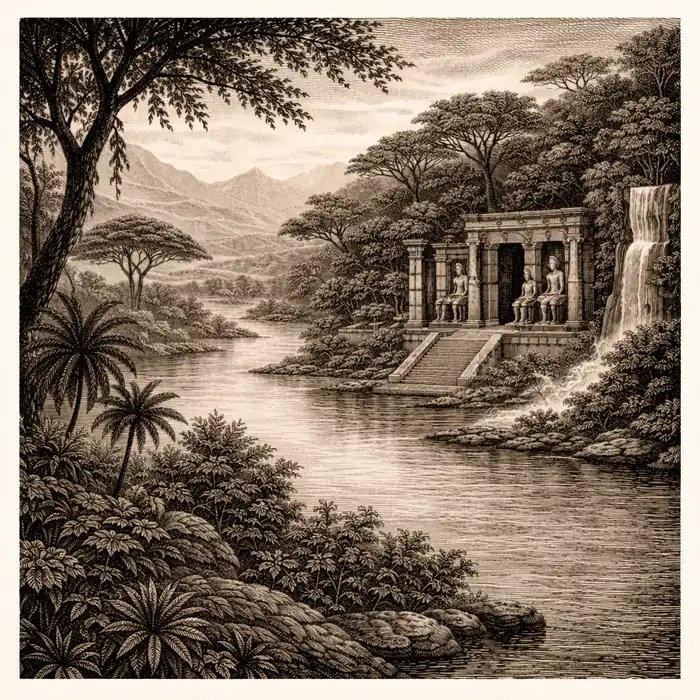
Howard describes Kush as a land of savannahs, jungles, and great rivers.
The capital city – though Howard was somewhat inconsistent about details – appears to be a genuine metropolis with temples, palaces, and markets. This isn’t a collection of villages but an organised kingdom with urban centres.
Kushite society is hierarchical, with a king or queen ruling over nobles, warriors, priests, and commoners. The military tradition is strong – Kushite warriors are feared throughout the Hyborian world as formidable fighters.
I would say Howard consistently depicted Kushites as dangerous opponents, not easy victories for Conan.
The religion of Kush incorporates both native traditions and Stygian influence. Set worship has made inroads, though it never completely dominated as it did in Stygia. Local gods and spirits remain important, creating a religious landscape more diverse than the Stygian theocracy.
Key Stories Featuring Kush
“The Snout in the Dark” features Kushite characters and touches on the kingdom’s politics. “The Vale of Lost Women” is set in the Black Kingdoms region, though it’s one of Howard’s more problematic stories in terms of racial depictions.
“Queen of the Black Coast” involves Conan’s relationship with Bêlit, whose crew includes Black warriors and whose adventures take her along the Black Coast.
I think “Queen of the Black Coast” deserves particular attention because it showcases Howard’s complexity. Bêlit leads a crew that includes black men treated as loyal, capable warriors.
The story takes African-inspired settings seriously as places of danger, mystery, and adventure. It’s not perfect by modern standards, but it’s not simple bigotry either. You can check it out in The Coming of Conan from Dey Rey.
In my opinion, the Kush-related stories work best when read as adventure tales in exotic settings – the same way Howard treated every setting, from Nordheim to Khitai. He wasn’t interested in anthropological accuracy; he wanted exciting backdrops for Conan’s adventures.
The Question of Representation
Modern readers and creators face a genuine challenge with Howard’s Black Kingdoms. Do you ignore this portion of his world? Do you revise it? Do you engage with it as-written whilst acknowledging its limitations?
I would argue for critical engagement. The Black Kingdoms contain genuine imaginative power alongside their problems. Kush as a concept – an ancient, proud African kingdom with its own magic, warriors, and traditions – is inherently appealing. The execution in 1930s pulp fiction has flaws, but the core idea has potential.
Recent Conan adaptations have attempted various approaches. Some expand Kush and the Black Kingdoms, giving them more depth and agency. Others have created new black characters less burdened by pulp-era baggage. In my view, both approaches have merit, and the material is rich enough to support multiple interpretations.
Historical Inspirations
Howard drew on several sources for his African-inspired kingdoms. The historical Kush and its successor state Meroë provided the name and some imagery. West African kingdoms like Mali and Songhai may have influenced his conception of organised Black African states. Egyptian depictions of their southern neighbours also filtered into Howard’s imagination.
I think it’s worth noting that Howard stood out in his era for acknowledging that Africa had genuine civilisations at all. Much popular culture of the 1930s depicted Africa as entirely primitive jungle. Howard’s inclusion of cities, kingdoms, and organised societies in the Black Kingdoms – however flawed – represented a step beyond complete erasure.
The warrior traditions Howard described have some basis in African military history. The disciplined armies of various African kingdoms genuinely impressed and terrified their neighbours and European colonisers alike. In my opinion, Howard’s respect for African martial prowess was genuine, even if his other depictions fell short.
Kush in the Broader World
Kush doesn’t exist in isolation. Its relationships with Stygia, the other Black Kingdoms, and the broader Hyborian world create a web of politics and commerce. Kushite mercenaries serve in foreign armies. Kushite gold flows through trade routes. Kushite magic – distinct from but related to Stygian sorcery – has its own reputation.
In my view, this interconnection is one of Howard’s strengths as a worldbuilder. He didn’t create isolated pockets of culture but a genuinely interconnected world where influence flows in all directions. Kush influences and is influenced by its neighbours, making it feel like part of a living world.
Reading Recommendations
If you want to explore Kush and the Black Kingdoms, I would suggest starting with “Queen of the Black Coast” – it’s one of Howard’s best stories regardless of setting. Approach it knowing the era it comes from, and you’ll find genuine thrills alongside the period limitations.
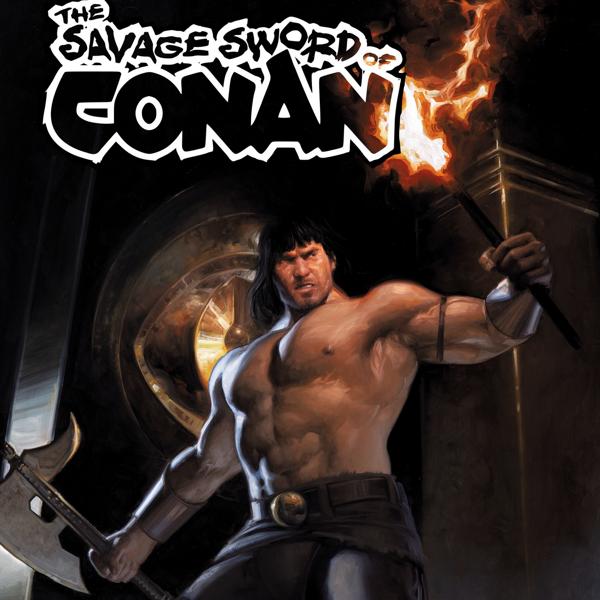
For a modern take, the recent Marvel Comics Conan runs have done interesting work expanding the Black Kingdoms and their characters. These adaptations benefit from decades of changed attitudes whilst retaining Howard’s core sense of adventure.
The Snout in the Dark, finished by Lin Carter and L. Sprague de Camp is a great read and a story I’d highly recommend. It’s an old school pulp adventure.
There’s a great adapatation of it in the original Conan omnibus volume 4.
To find the best of the current Conan the Barbarian comics go here.
Further land and city reading in Conan’s world
Stygia and why it’s like Egypt
What’s the difference between Nemedia and Aquilonia?
Zamora and its thieves (including Conan)
Frequently Asked Questions
Is the Hyborian Age Kush based on the historical Kingdom of Kush?
The name is directly borrowed, and some imagery parallels the historical Nubian kingdom. However, Howard freely mixed inspirations and wasn’t attempting historical accuracy. His Kush is a pulp fantasy creation inspired by but not faithful to history.
How should modern readers approach problematic elements in these stories?
I would recommend reading with historical awareness whilst not discarding the material entirely. Acknowledge the limitations, appreciate the genuine strengths, and understand that engaging critically with flawed works is part of mature reading.
Did Howard depict any Black characters positively?
Yes, several. Bêlit’s crew in “Queen of the Black Coast” includes Black warriors treated with respect. Individual Kushite characters in various stories display courage, intelligence, and honour. The picture is complicated rather than uniformly negative.
Why does Kush have Stygian religious influence?
In Howard’s worldbuilding, Stygia is the dominant culture in that region and has been for thousands of years. Cultural and religious influence flowing across borders is realistic, and it adds depth to both kingdoms.
Are there good modern adaptations of the Black Kingdoms material?
Recent comic adaptations, particularly from Marvel, have worked to expand and improve upon Howard’s foundation. They retain the adventure while addressing the original material’s limitations, creating something both faithful and updated.