Zamora and the City of Thieves

Disclosure: This post is reader-powered and contains affiliate links. If you click through and make a purchase, I may earn a commission at no additional cost to you.
Table of Contents
Every legendary career has a beginning, and Conan’s started not with a crown or a battlefield command but with lockpicks and rooftop escapes in Zamora – a decadent eastern kingdom where young barbarians learned that civilisation’s greatest treasures were there for the taking, if you were bold enough.
Young Conan as a Thief
Zamora represents a crucial phase in Conan’s development. After leaving Cimmeria as a youth, he eventually found his way to this eastern kingdom, where he spent years working as a thief. I think this period is fascinating because it shows Conan adapting to civilisation on his own terms – he didn’t become civilised, he simply learned to exploit civilisation.
Howard and following writers set several early Conan stories in Zamora, establishing it as a land of ancient cities, decadent nobles, and thriving criminal underworlds. The kingdom sits at a crossroads between the Hyborian west and the mysterious east, giving it a unique character. In my opinion, Zamora’s position as a meeting point of cultures makes it one of Howard’s most atmospheric creations.
The young Conan who arrives in Zamora is already formidable physically but still learning how the wider world works. His Cimmerian directness clashes wonderfully with Zamorian cunning. I would say the Zamoran stories capture Conan at his most adaptable, acquiring skills that will serve him throughout his later career.
Arenjun: The City of Thieves
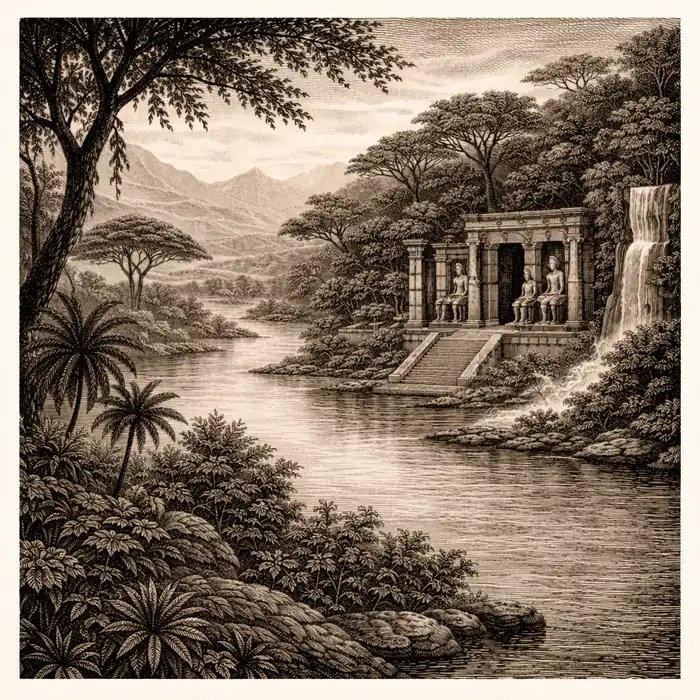
If Zamora has a heart, it’s Arenjun – the infamous City of Thieves. Howard described it as a place where thievery was practically the civic religion, where the Thieves’ Guild operated openly, and where even the nobility participated in various forms of larceny and corruption.
Arenjun’s towers rise against the Zamorian sky, connected by rooftops that provided highways for those who preferred not to walk the streets. I think Howard had tremendous fun imagining this city – every shadow concealed a cutpurse, every mansion held treasures worth risking death for, and every tavern hosted thieves comparing their latest scores.
In my view, Arenjun functions as the perfect training ground for young Conan. Here he learned to climb walls, pick locks, case targets, and escape pursuit. More importantly, he learned that civilised people were often more treacherous than any Cimmerian clan-enemy – a lesson that coloured his view of civilisation forever.
“The Tower of the Elephant”
The most famous Zamoran story is “The Tower of the Elephant,” which I would argue is one of Howard’s absolute masterpieces. Young Conan, still a thief in Arenjun, decides to rob the tower of the sorcerer Yara – a target so dangerous that even the Thieves’ Guild considers it suicide.
What follows is a story that combines heist thriller, cosmic horror, and genuine pathos in ways that shouldn’t work but absolutely do. Conan encounters the alien being Yag-Kosha, imprisoned and tortured by Yara, and the resolution is both triumphant and melancholy. In my opinion, this story demonstrates everything Howard could do at his best.
“The Tower of the Elephant” showcases young Conan perfectly. He’s bold to the point of recklessness, supremely confident in his abilities, and yet capable of genuine compassion when confronted with suffering. The story also establishes that Conan’s world contains horrors beyond human comprehension – a theme that runs throughout the saga.
It was the Tower of the Elephant that made me stop what I was doing the first time I heard it (yep, I was actually listening to an audiobook). Yara’s monologue, was so moving, so incredible, I think it was that day I became a true Robert E Howard fan.
If you want to read it yourself I would recommend the Del Rey The Coming of Conan book, or you may be able to find it in the public domain for free.
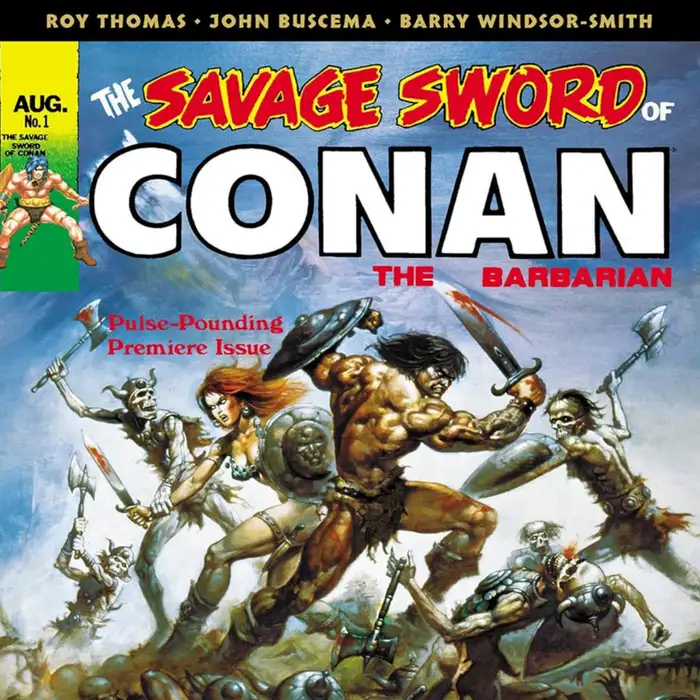
There’s a great comic adaptation in the new Conan: Reforged from Titan Comics.
A fragment called The Hall of the Dead was also set in Zamora but was unfinished by Robert E Howard himself, instead being completed by Sprague de Camp.
Many post-REH Conan pastiche novels are set in Zamora, including The Spawn of the Serpent and Conan and the Spider God.
Zamorian Culture and Character
Zamora itself draws on vaguely Middle Eastern and Central Asian inspirations, though Howard blended influences freely as always. The architecture features domed towers and walled gardens. The people tend toward dark hair and olive skin. The culture values subtlety, indirection, and the appearance of civilisation over its substance.
I think Howard meant Zamora to represent a certain kind of decadence – old civilisation gone soft and corrupt. The Zamorians aren’t warriors; they’re schemers. They don’t conquer territory; they acquire wealth through trade, theft, and manipulation. For a young Cimmerian, it must have been an education in everything his homeland was not.
Religion in Zamora involves various spider-gods and other peculiar deities. Howard didn’t develop Zamorian theology in detail, but the hints suggest something ancient, strange, and slightly sinister. In my view, the spider imagery particularly suits a land of webs, traps, and patient predators.
The Thief’s Skills
Conan’s time in Zamora gave him abilities that served him throughout his career. He learned to move silently, to climb seemingly impossible surfaces, to open locks, to blend into crowds, and to read the body language of both marks and threats. These aren’t warrior skills – they’re specialist knowledge that a Cimmerian hill-fighter would never otherwise acquire.
I would say the thief years humanised Conan in important ways. A pure warrior might become a killing machine, but Conan’s thieving background gave him cunning, patience, and appreciation for the indirect approach. In later stories, when Conan needs to infiltrate rather than assault, his Zamorian education pays dividends.
I went a lot deeper into Conan’s time as a thief here.
The moral flexibility Conan displays also traces to Zamora. In Cimmeria, right and wrong were relatively simple matters. In Arenjun, everything existed in shades of grey. I think Conan emerged from Zamora with a pragmatic morality – he’d steal without guilt but maintain his own code of honour beneath the lawbreaking.
Zamora’s Place in the World
Geographically, Zamora sits east of the major Hyborian kingdoms but west of the truly exotic lands like Turan and Khitai. This positioning makes it a gateway – young adventurers from the west often encounter Zamora before pushing further east, and eastern travellers pass through Zamora going the other direction.
Politically, Zamora maintains independence through a combination of geography, wealth, and careful diplomacy. The kingdom isn’t militarily powerful, but it’s wealthy enough to hire mercenaries and connected enough to make conquest more trouble than it’s worth. In my opinion, Zamora represents successful weakness – survival through cleverness rather than strength.
The merchant culture of Zamora means goods from across the Hyborian world pass through its bazaars. This makes Zamorian cities cosmopolitan in ways that more insular kingdoms are not. I would say you could meet anyone in Arenjun, from Cimmerian barbarians to Stygian sorcerers to Turanian merchants.
It’s quite a different place from Aquilonia and Nemedia, but integral to Robert E Howard’s universe building.
Why Conan’s time in Zamora matters
For understanding Conan’s full character, the Zamoran period is essential. This is where he transformed from a raw barbarian into something more versatile. The man who would eventually become king learned, in Arenjun’s shadows, how civilisation actually worked beneath its pretensions.
Conan’s full thief-era adventures can be found here.
I think Howard understood that his hero needed more than fighting ability to be interesting. The thief skills give Conan options that pure warriors lack. They also connect him to a long tradition of trickster heroes – figures who succeed through wit as much as strength.
For readers, the Zamoran stories offer some of Howard’s most purely entertaining work. They’re faster-paced than the later political tales, more focused on immediate adventure than cosmic stakes. In my view, they’re perfect entry points for new readers while remaining satisfying for longtime fans.
Frequently Asked Questions
How old was Conan during his time in Zamora?
Howard was inconsistent about specific ages, but Conan was generally young during the Zamoran period – late teens to early twenties. He’d recently left Cimmeria and was still learning about the wider world. These are his formative adventures.
Is the Tower of the Elephant in Arenjun?
Yes, Yara’s tower stood in Arenjun, making its robbery particularly audacious. The story “The Tower of the Elephant” takes place entirely in the City of Thieves and remains one of Howard’s most celebrated Conan tales. It’s important to note the name Arenjun was given later by Lin Carter, not Robert E Howard, who called the city of Zamora the same as the country (Zamora).
Did Conan have formal training as a thief?
Howard doesn’t describe formal guild training, but Conan clearly learned from more experienced thieves in Arenjun. He acquired professional-level skills that suggest either instruction or extensive practical experience – probably both.
Why did Conan leave Zamora?
Conan’s wanderlust and trouble with local authorities eventually drove him onward. His career took him through many lands after Zamora, including stints as a mercenary, pirate, and eventually king. He never stayed anywhere permanently until claiming Aquilonia’s throne.
Is Zamora based on a real civilisation?
Howard drew on various Middle Eastern, Central Asian, and Byzantine influences without closely following any single model. Zamora feels vaguely Persian or Turkish but remains a fantasy creation. I would say Howard prioritised atmosphere over historical accuracy for this one.