Conan the Thief: Era Guide, Best Comics & Essential Stories

Disclosure: This post is reader-powered and contains affiliate links. If you click through and make a purchase, I may earn a commission at no additional cost to you.

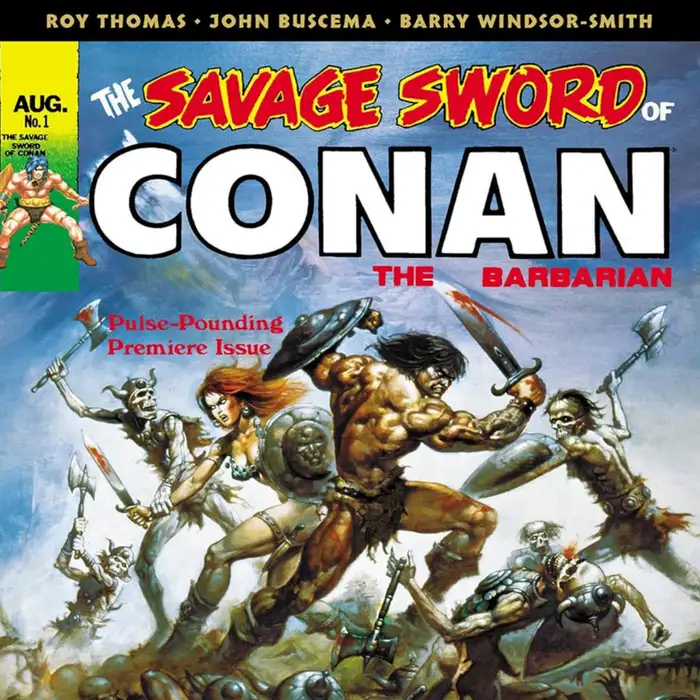
A read of the new Savage Sword of Conan: Reforged (pictured above) got me thinking. Is there a ‘best’ time in Conan’s life or career? I decided to find out.
Sidenote: the new, colourised Reforged is beautiful, by the way. Now, without further ado…
Before Conan was a mercenary, pirate, or king, he was a thief. In the night-soaked streets of Zamora, especially the cities of Arenjun (Zamora the Accursed) and Shadizar the Wicked, the young Cimmerian learned stealth, survival, and the treachery of civilisation.
Table of Contents
- Who or What Is “Conan the Thief”?
- Conan’s Traits in the Thief Era
- REH Stories That Define Conan the Thief
- Best Conan the Thief Comics
- Major Themes and Story Cycles
- Key Thief-Era Locations
- Notable Adaptations
- Where the Thief Era Fits in Conan’s Life
- Collecting Conan the Thief
- See Also
- FAQs
Who or What Is “Conan the Thief”?
“Conan the Thief” covers Conan’s earliest adult adventures in the Hyborian Age, when he leaves the wilds behind and steps into the decadent cities of Zamora. He is believed to be around 17-18 years old at this point in his life.
Arenjun, also known as the City of Thieves and sometimes called Zamora the Accursed, is a crossroads for rogues, assassins, and smugglers from across the world.
From there, Conan drifts toward Shadizar the Wicked, a corrupt capital where temples, taverns, and back alleys hide both easy riches and sudden death.
Conan’s Traits in the Thief Era
This is the age of climbing forbidden towers, robbing sorcerers, and slipping through mazelike streets under cover of darkness. Conan learns to treat civilisation as just another jungle, filled with predators in silk instead of fur, and he builds the skills that will support every later phase of his life.
During the thief era, Conan is fast, lean, and almost feral in his reactions, able to scale walls and slip through windows with unnerving ease for a man of his size. His instincts are tuned to danger, and he is as likely to dodge trouble with a quick decision as he is to carve a path through it with steel.
Conan’s personal code is still forming, which means he may work with thieves, mercenaries, or priests if it serves his goals, but he never fully trusts any of them. Gold, strange relics, and forbidden temples draw him forward, yet betrayal by allies, patrons, and cults steadily shapes his contempt for authority and organised power.

REH Stories That Define Conan the Thief
Robert E. Howard’s original prose stories are the bedrock of the thief era and shape how later comics depict Conan in Zamora.
I still remember the day I first listened to The Tower of the Elephant (yes, I listened to the audiobooks before later turning to the written stories) and I was absolutely blown away. I vividly recall stopping what I was doing as Yag-Kosha related his tale and it was this story that made me not just a bigger fan of Conan, but come to regard Robert E Howard as one of the finest writers who ever lived.
So, the three main stories from the man himself are:
- “The Tower of the Elephant” – Conan infiltrates a tower in Arenjun to steal a legendary jewel and discovers the tragic truth behind its guardian.
- “The God in the Bowl” – A murder mystery in a museum-like setting, showing Conan entangled with authorities after a theft goes badly.
- “Rogues in the House” – A tale of treachery, hired murder, and a monstrous prison-break that exposes the rot in high places.
The God in the Bowl is an excellent story for conveying the loyal/betrayed side of Conan (DO NOT screw him over) and Rogues in the House is another all-time classic, and includes the loveable Murillo, the man-like Thak and the despicable Nabonidus.
These three stories are strong contenders for any ‘best of’ Conan lists and define the Thief era.
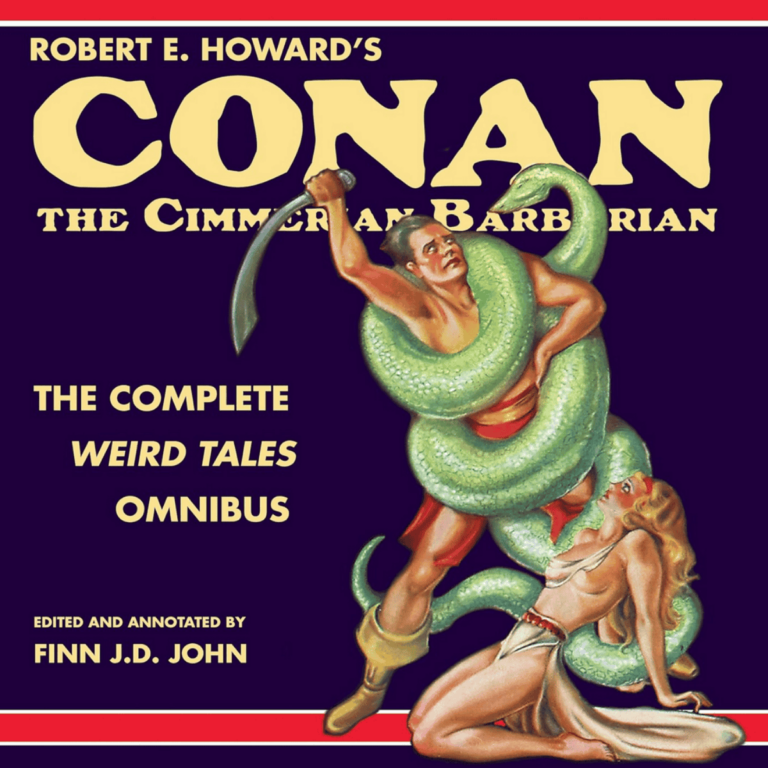
I listened to the stories on the Weird Tales audiobook, though The God in the Bowl was not included as it was never published by Weird Tales.
Check this out for an overview to the original Conan books.
We also get the excellent quote “Civilized men are more discourteous than savages because they know they can be impolite without having their skulls split, as a general thing.” from this era, and the Tower of the Elephant in particular.
Best Conan the Thief Comics (Curated)
These comics give a clear, atmospheric look at Conan the Thief and make a strong reading path for new fans and collectors.
- Conan the Barbarian #4 – “The Tower of the Elephant” (Marvel)
A definitive thief-era story set in Arenjun, where Conan joins Taurus of Nemedia to scale a sorcerer’s tower for a legendary jewel and discovers something far stranger at its heart. - Conan #17 – “The City of Thieves” (Dark Horse)
A sharp modern take showing Conan actively learning the thief’s trade, navigating urban corruption, and realising how little honour exists in city alleys. - Conan the Barbarian #11 – “Rogues in the House” (Marvel)
A brutal mix of political intrigue, the Red Priest, and the unforgettable creature Thak, highlighting how Conan is used as a pawn and how he refuses to stay one. - Conan #41-44 “Rogues in the House” (Dark Horse) Cary Nord’s stellar artwork takes the original story up a notch. Not to be missed.
- Savage Sword of Conan #174 – “Red Stones”
A heist that begins in Arenjun and spills into Corinthian trouble, blending urban skulduggery with the wider Hyborian world. - Conan the Barbarian #6 – “Devil-Wings Over Shadizar” (Marvel)
A city-of-thieves tale that fuses decadent Shadizar nightlife with lurking supernatural horror above its rooftops. - Savage Sword of Conan #165 – “City of Rats”
A moody return to the underbelly of Arenjun, where rot, vermin, and human treachery all compete for Conan’s life. - Conan #29–36 (Dark Horse) – “Wrath of Anu” Prelude
A longer arc of border-town intrigue and urban corruption that expands the thief-era feel beyond Zamora while preserving its noir atmosphere.
The Barbarian Original Years Omnibus One is a good place to start.
Check out this general guide to the Conan comics for a clear overview.
Discussions on Conan comics chronologies can be found here.

Major Themes and Story Cycles
Arenjun Cycle (Zamora the Accursed)
Arenjun, often identified as the City of Thieves or Zamora the Accursed, is the core setting for many thief-era tales. Here Conan specialises in tower climbs, temple break-ins, and thefts from powerful sorcerers who guard more than mere gold.
These stories frequently revolve around cult infiltration, cursed jewels, and bargains that twist into betrayal, blending gritty crime with cosmic or eldritch consequences. The contrast between cramped, filthy streets and glittering towers gives the Arenjun cycle its signature tone of urban sword-and-sorcery noir.
The tower heist in the 1982 Conan the Barbarian film is absolutely a tribute/parallel to the Tower of the Elephant as well.
The Shadizar Road
The road between smaller Zamorian villages and Shadizar the Wicked exposes Conan to gamblers, corrupt officials, and rival thieves who treat life as a game of wagers and knives. Ruined waystations and roadside temples often hold forgotten relics and spirits, turning simple travel into lethal adventure.
In these tales, Conan experiences how trade routes and politics feed the decadence of Shadizar, and how common folk suffer under distant, uncaring powers. The mix of travel, roadside danger, and city intrigue makes this thread feel like a Hyborian crime road movie.
Key Thief-Era Locations
- Arenjun – City of Thieves (Zamora the Accursed) – A notorious den of criminals where Conan’s professional thieving begins.
- Shadizar the Wicked – Capital of Zamora, a gateway city famed for decadence, temples, and lethal intrigues.
- Numalia (Nemedia) – A more ordered city whose laws and politics still offer plenty of cracks for a thief to exploit.
- Border towns in Corinthia, Ophir, and Koth – Frontier settlements where corrupt officials and petty lords provide opportunities for bold heists.
Notable Adaptations
- “The Tower of the Elephant” – Adapted multiple times across comics and formats, each with a unique visual take on Arenjun and Yara’s tower.
- “Rogues in the House” – Revisited in different versions that emphasise either the political plot, the Red Priest, or the monstrous Thak.
Where the Thief Era Fits in Conan’s Life
The thief period sits early in Conan’s career, after his harsh youth in Cimmeria and raids on northern borders but before he becomes a regular mercenary in organised armies. Many timelines place his Zamorian years as the true beginning of his adult legend.
Later eras see him transform from mercenary to wanderer, pirate, corsair, free companion, and eventually warlord and king, but his time in Zamora remains the crucible that taught him how civilisation really works. Many of his later decisions about rulers, priests, and empires reflect hard lessons first learned in Arenjun and Shadizar.

Collecting Conan the Thief (Simple Guide)
For collectors who want to focus on Conan the Thief without chasing every appearance, these editions offer strong coverage and good reading flow.
- Marvel Omnibus: Conan the Barbarian Vol. 1 – Key early issues including cornerstone thief-era stories and foundational adventures.
- Dark Horse Conan Library Editions (Busiek run) – Oversized volumes that collect the early Dark Horse material, including “The City of Thieves” and “Wrath of Anu” arcs.
- Dark Horse Epic Collections – especially the first two. Hard to come by, but you might find them on ebay. Aim for ‘The Heart of Yag-Kosha’.
- Titan’s Savage Sword Omnibus line – Newer hardcovers that re-present classic Savage Sword material, ideal for building a thief-era shelf.
- Conan Reforged – The Savage Sword version of The Tower of the Elephant has just been reprinted (and in colour for the first time!) and it is truly excellent.

See Also
Conan the Thief is one of my favourite periods of Conan’s life (along with the Liberator times). I love trying to track his life both backward and forward along the Hyborian roads.
I’ll update the links below as I get around to writing them.
- Conan the Cimmerian – Focus on his brutal northern youth and first steps out of Cimmeria before he ever reaches Zamora.
- Conan the Mercenary – The next major era, where he trades stealth for open battle in armies and free companies.
- Lore pages – Zamora, Arenjun (Zamora the Accursed), Shadizar the Wicked, and related Hyborian locations.
- Characters – Taurus of Nemedia, Jenna, Isparana, Nestor, and other rogues who cross paths with Conan during his thief years.
FAQs
When does the Thief era take place in Conan’s life?
The Thief era happens early in Conan’s adulthood, shortly after he leaves Cimmeria and before he becomes a mercenary or wanderer. Many timelines treat his Zamorian years as the true beginning of his legendary career. He’s generally 17-18 years old here, though so later thief stories see him as probably 19.
Why does Conan become a thief in Zamora?
Zamora offers both danger and opportunity. Its cities, especially Arenjun and Shadizar, are filled with thieves, cults, and decadent nobles. With no allies or wealth, young Conan turns to thievery as a way to survive and to understand how civilisation really works.
Is Arenjun the same as “Zamora the Accursed”?
Arenjun is often called the City of Thieves and is closely tied to the darker epithet “Zamora the Accursed”. The name reflects its corruption, criminal underworld, and the dangerous temples and towers that dominate its skyline. The name Arenjun was made up by Sprague deCamp, a later writer of Conan the Barbarian.
Which stories best represent Conan as a thief?
Core examples include “The Tower of the Elephant”, “The God in the Bowl”, and “Rogues in the House”. These stories show Conan infiltrating towers, getting entangled with city authorities, and dealing with betrayal in the heart of civilisation.
Are the Dark Horse comics part of the Thief era?
Some Dark Horse issues reinterpret Conan’s early years, especially around “The City of Thieves” and the “Wrath of Anu” material. While they are not identical to Marvel’s chronology, many fans treat them as strong thief-era or early-career companion pieces.
What defines the Thief era compared to other Conan phases?
The Thief era focuses on urban adventure: dark temples, criminal factions, corrupt officials, and jobs done under moonlight. Conan relies more on agility and cunning than on battlefield strength or command, and much of the conflict plays out in streets, taverns, and back rooms rather than open war.
Do the Thief-era stories influence Conan later in life?
Yes. The betrayals and corruption Conan faces in Zamora shape his lifelong distrust of authority and organised religion. His time in Arenjun and Shadizar strongly influences his later decisions as a mercenary, wanderer, and eventually as a king.
Do I need to read every Thief-era story to understand Conan?
No. A handful of core stories gives you a complete understanding of the era. Additional tales deepen the lore and fill in gaps, but they aren’t required to follow Conan’s development from thief to mercenary and beyond.
Where should new readers start with Conan the Thief?
The best starting point is “The Tower of the Elephant”, followed by “Rogues in the House”. Modern readers can also begin with Dark Horse’s “City of Thieves” arc, which gives a stylish, accessible look at this period in Conan’s life.
What comes after the Thief era in Conan’s timeline?
The next major period is Conan the Mercenary, where he joins armies and free companies. From there he moves into wanderer, pirate, corsair, and free companion phases before eventually ruling as a king.